
Hi, I’m Miraj Khan, and I wrote this guide to share some of the Outdoor Patio Ideas and practical tips I’ve learned through my interest in gardening and outdoor design.
A beautiful outdoor patio can give you a comfortable place to relax, enjoy meals, spend time with family, or simply sit outside with a cup of coffee. You don’t need a large Backyard or an expensive makeover to create a space that feels welcoming.
The right combination of comfortable furniture, greenery, lighting, flooring, and a few decorative details can completely change the look of an ordinary Outdoor area.
In this guide, each idea includes simple decorating tips and a few helpful items to consider, so you can understand how everything comes together and create a Patio that works well for your own backyard.
1. Cozy Patio Surrounded by Potted Greenery
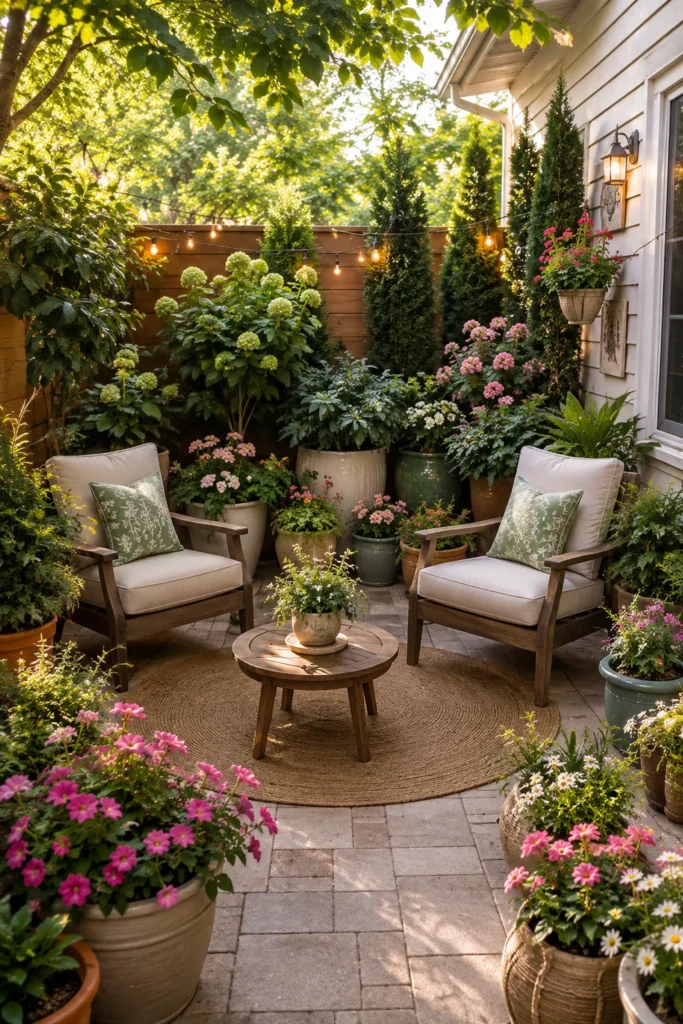
Turn a simple patio into a garden-like retreat by placing plants around the seating area. Use different pot sizes and plant heights to create a layered green backdrop.
Keep the tallest plants toward the back and place smaller flowering pots near the chairs. Leave enough open space around the furniture so the patio remains easy to use.
A few helpful options:
- Large Patio Planters: Place them at corners to create a natural frame around the seating area.
- Flowering Container Plants: Add seasonal color without changing the permanent garden beds.
- Outdoor Lounge Chairs: Comfortable chairs give you a dedicated place to relax among the plants.
2. Compact Patio With a Built-In Bench
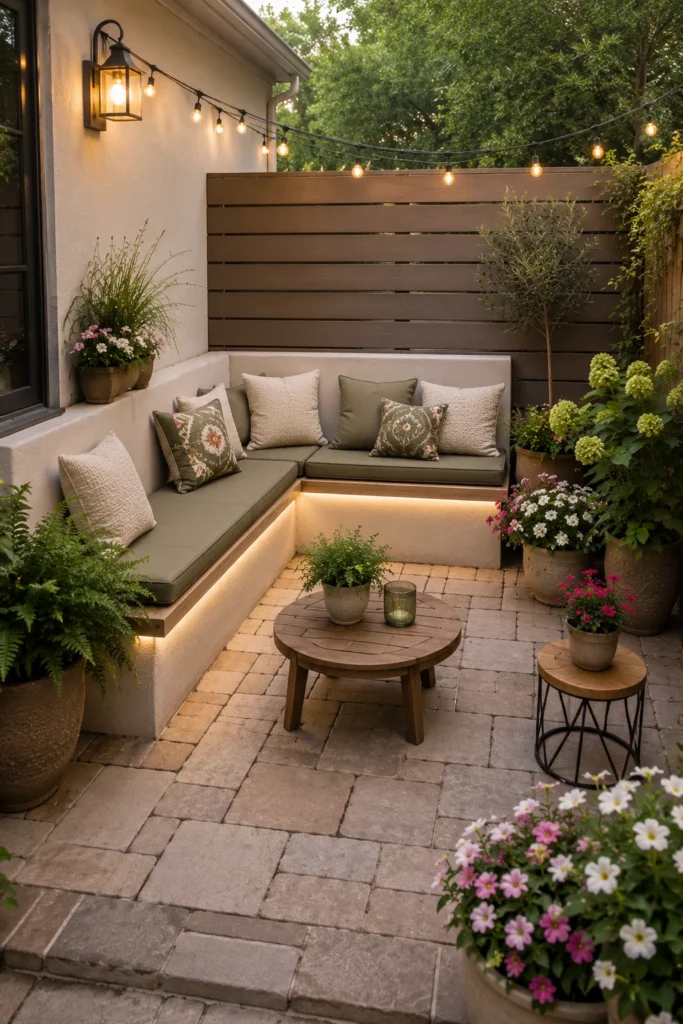
A built-in bench is useful when you want comfortable seating without filling a small patio with several chairs. It can also make an empty wall or fence more functional.
Build the bench along one side of the patio and add weather-resistant cushions. Keep the center open for a small table or walking space.
A few helpful options:
- Outdoor Bench Cushions: Make a firm built-in bench more comfortable for longer sitting.
- Weatherproof Throw Pillows: Add color and personality without taking up floor space.
- Small Outdoor Side Table: Gives you a convenient place for drinks, books, or a small plant.
3. Garden Patio With a Wooden Pergola
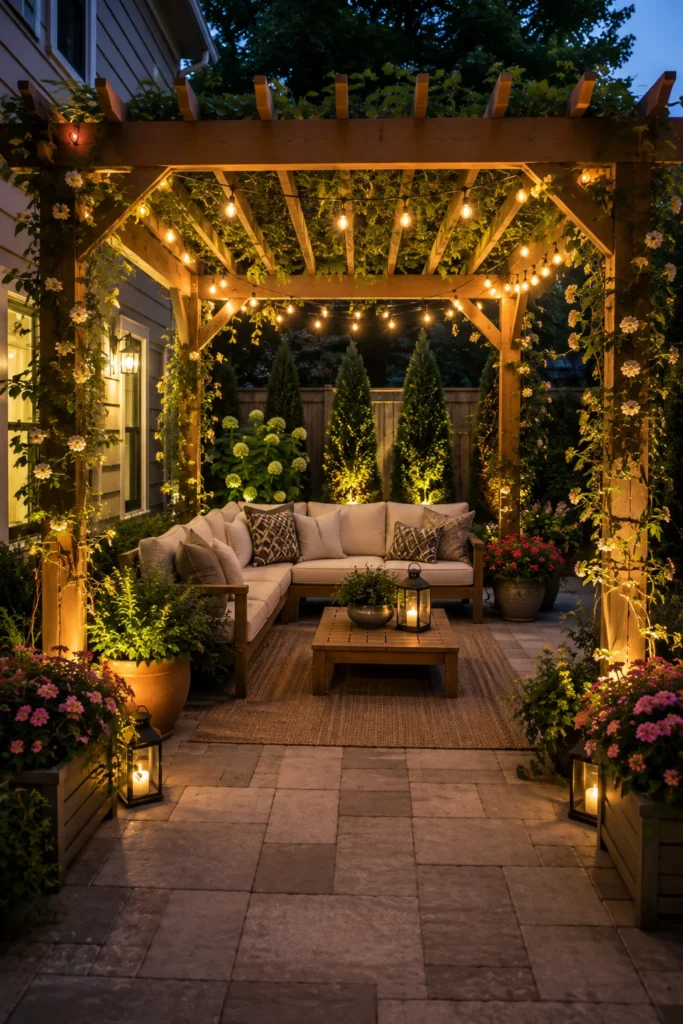
A pergola can give your patio a defined outdoor-room feeling while providing a framework for shade and climbing plants.
Use a simple wooden structure above the seating area. Add climbing vines along the posts and warm lighting underneath for a softer evening setting.
A few helpful options:
- Wooden Pergola: Creates a clear structure above the patio and helps define the seating zone.
- Climbing Garden Plants: Add greenery around the posts and gradually soften the wooden frame.
- Outdoor String Lights: Bring gentle illumination to the seating area after sunset.
4. Curved Patio With a Flower Border
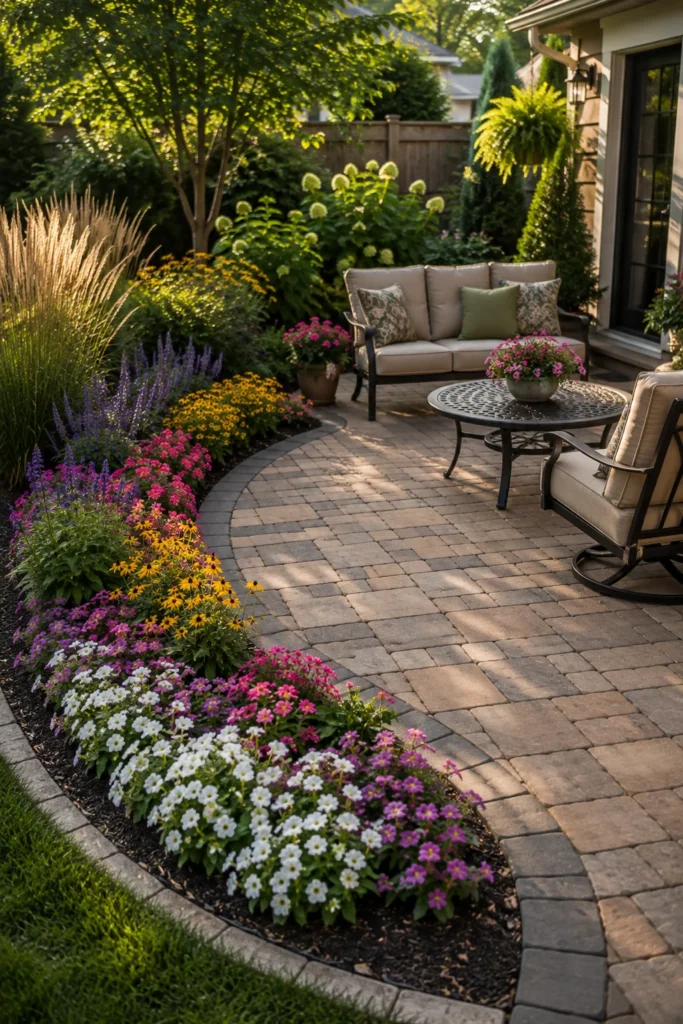
Soften the edges of a paved patio by creating a curved planting bed along one or two sides. The curved garden line gives the hard paving a more natural appearance.
Use a garden hose to mark the curve before preparing the soil. Plant shorter flowers near the patio and taller greenery farther behind them.
A few helpful options:
- Garden Border Edging: Keeps soil and mulch from spreading onto the patio.
- Low-Growing Flowers: Fill the front of the curved bed with color close to the seating area.
- Ornamental Grasses: Add height and movement behind the flowering plants.
5. Small Patio With a Fire Pit
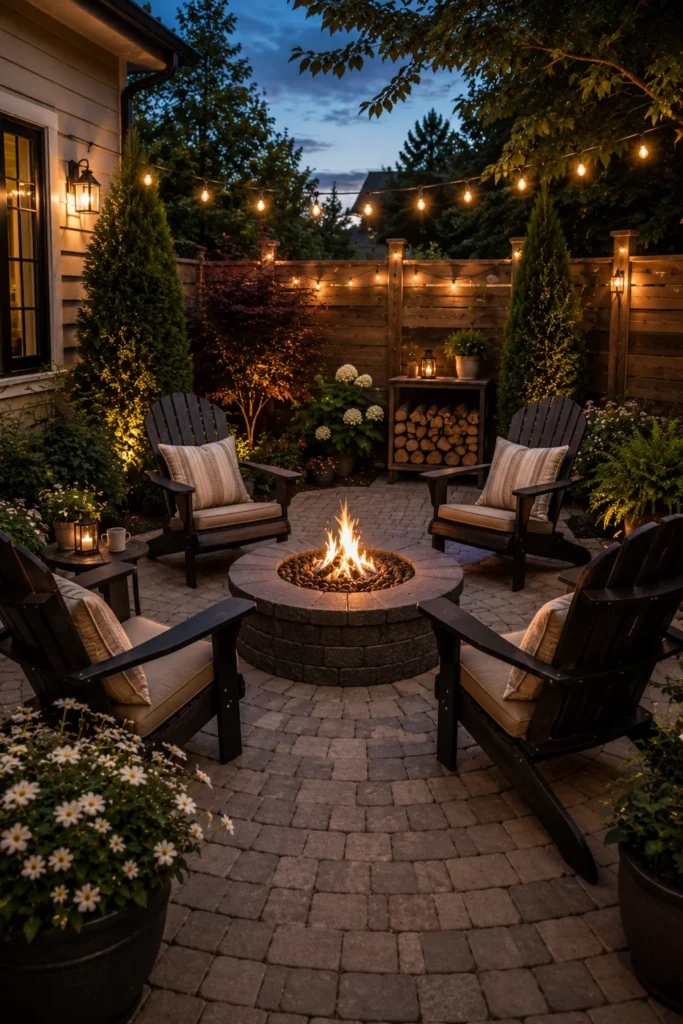
A fire pit can turn a basic patio into a comfortable evening gathering area. Even a compact model can work if there is enough safe space around it.
Place the fire pit in the center and arrange chairs around it with comfortable walking space between each seat.
A few helpful options:
- Compact Outdoor Fire Pit: Creates a central feature for cool evenings and outdoor gatherings.
- Adirondack Chairs: Their relaxed shape works well around a fire pit.
- Outdoor Firewood Storage: Keeps firewood organized instead of leaving it scattered around the patio.
6. Outdoor Dining Patio With a Wooden Table
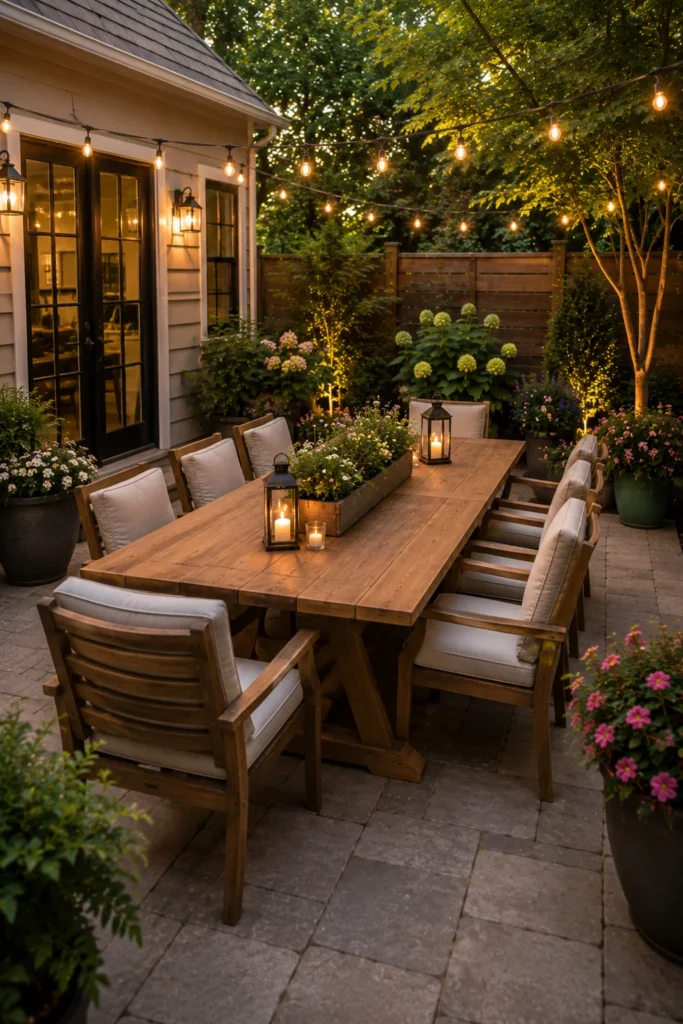
If you enjoy eating outside, make the dining table the main feature of your patio. A sturdy wooden table can work for everyday meals as well as larger family gatherings.
Leave enough room behind each chair so people can sit down and move around comfortably. Add plants around the outside rather than crowding the dining area.
A few helpful options:
- Solid Wood Outdoor Table: Provides a practical surface for meals and gatherings.
- Comfortable Dining Chairs: Choose chairs that are easy to move and suitable for outdoor weather.
- Outdoor Table Centerpiece: A simple planter or low flower arrangement can decorate the table without blocking conversation.
7. Relaxing Patio With a Hanging Chair
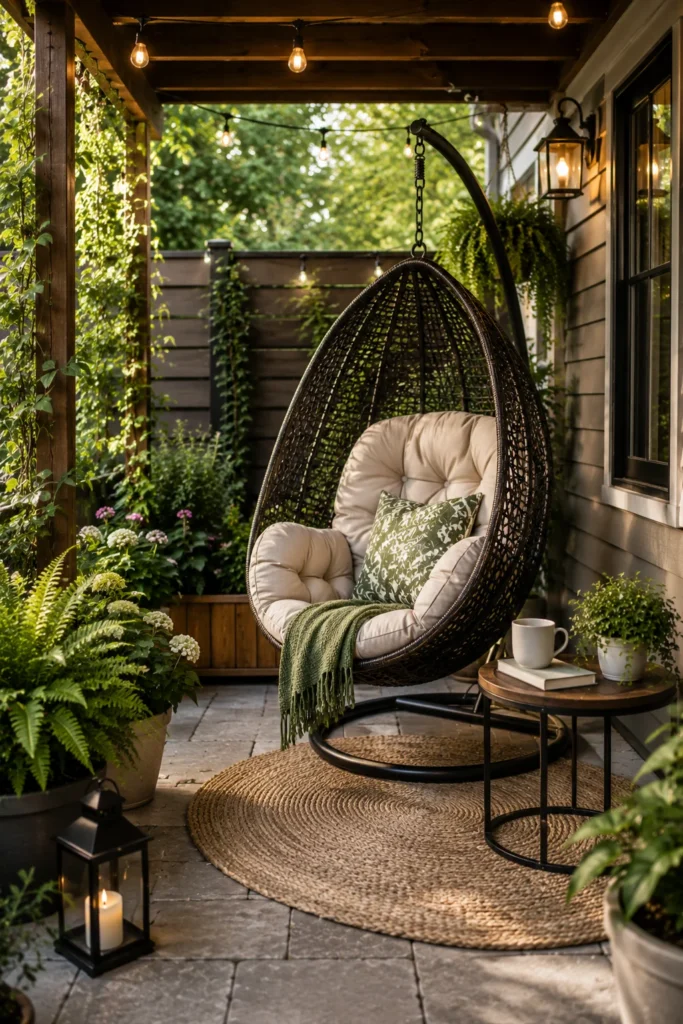
Create a peaceful reading corner with a hanging chair placed in a quiet part of the patio. It works especially well near plants or under a shaded structure.
Make sure the chair has enough clearance to swing safely. Add a soft cushion and a small table within easy reach.
A few helpful options:
- Hanging Egg Chair: Provides a comfortable seat while becoming a visual feature of the patio.
- Outdoor Seat Cushion: Makes the chair more comfortable for longer periods.
- Small Round Side Table: Keeps your coffee, book, or phone close by.
8. Natural Stone Patio With Garden Plants
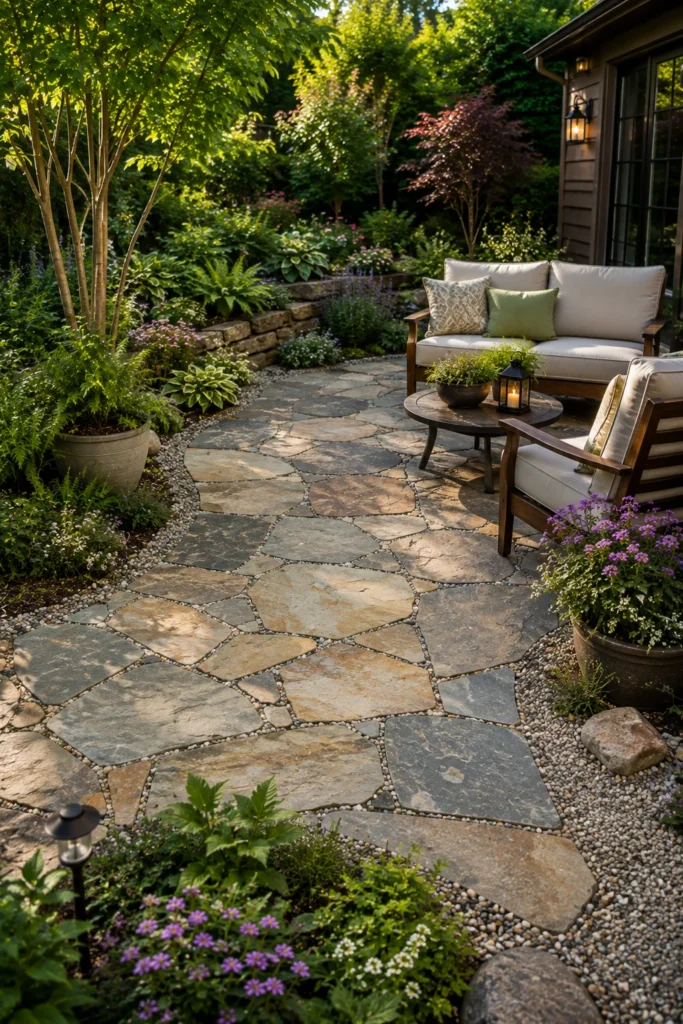
Natural stone can make a patio feel connected to the surrounding landscape. Its varied colors and textures work particularly well with informal garden planting.
Use larger stones for the main surface and smaller gravel around the edges. Let plants soften some of the hard lines around the patio.
A few helpful options:
- Natural Stone Pavers: Give the patio an earthy foundation that works well with garden surroundings.
- Decorative Gravel: Fills small areas around the paving and improves the transition to planting beds.
- Low Garden Plants: Help soften the edges without covering the main walking area.
9. Vertical Garden Patio
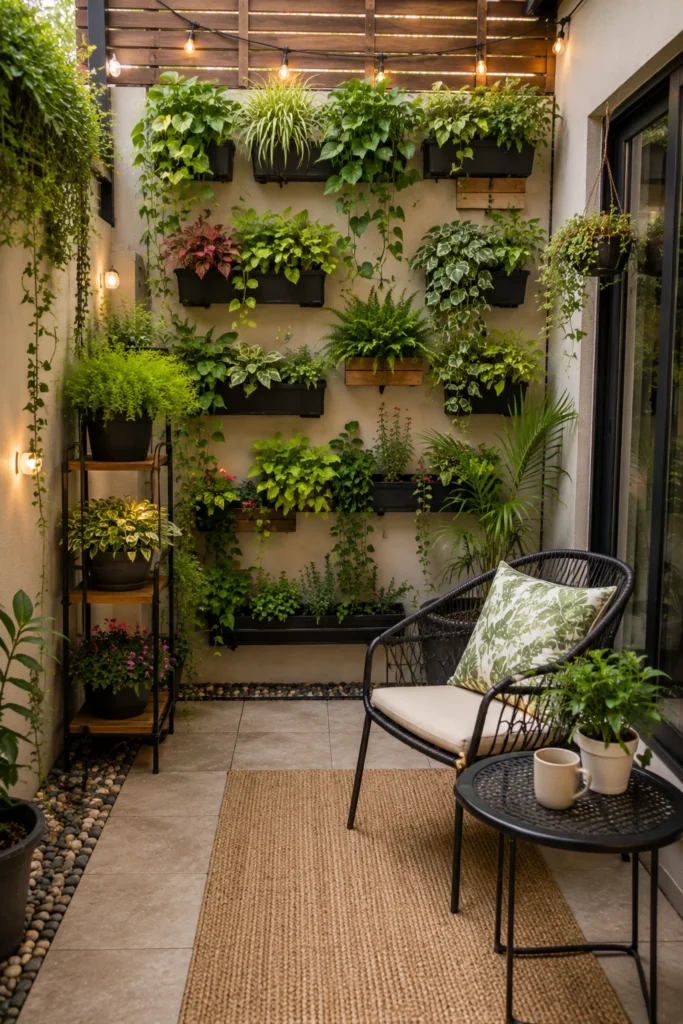
When floor space is limited, use walls and fences for plants. A vertical garden can bring plenty of greenery to a small patio without taking away valuable seating space.
Install planters at different heights and keep the arrangement easy to reach for watering and maintenance.
A few helpful options:
- Wall-Mounted Planters: Add greenery to unused vertical space.
- Vertical Plant Stand: Gives you several planting levels while keeping pots organized.
- Trailing Plants: Their leaves can hang downward and make a plain wall feel much greener.
10. Patio Defined With an Outdoor Rug
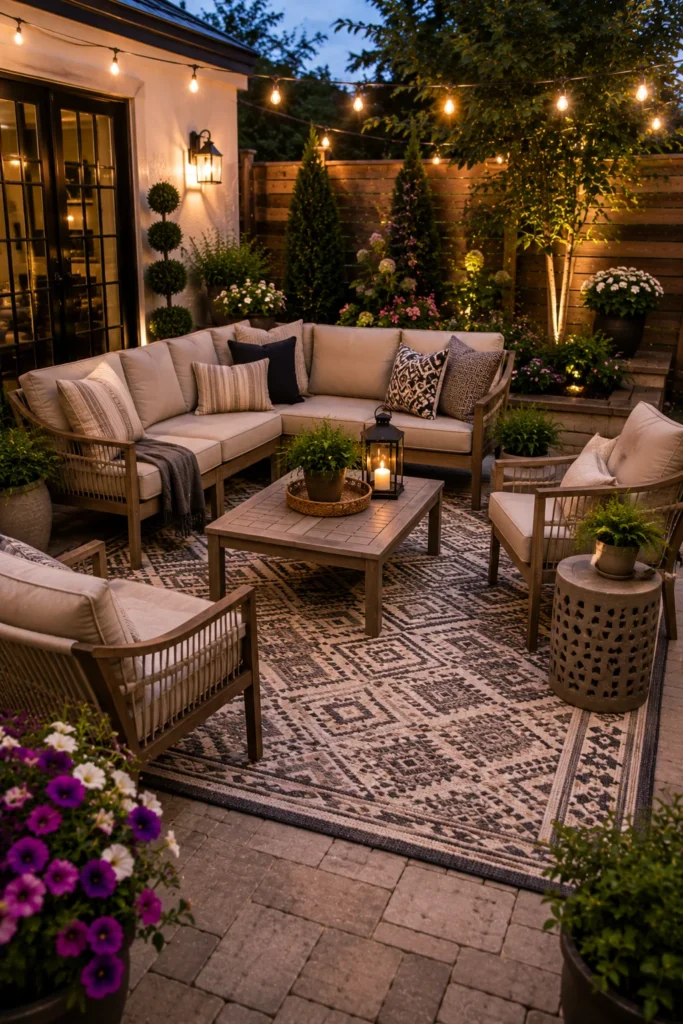
An outdoor rug can visually separate the seating area from the rest of the patio. It also adds color and makes hard paving feel more comfortable.
Choose a rug designed for outdoor conditions and select a size that reaches beneath at least the front legs of your main seating.
A few helpful options:
- Weather-Resistant Outdoor Rug: Defines the seating area and adds softness underfoot.
- Outdoor Sofa: Creates the main comfortable seating zone around the rug.
- Low Coffee Table: Completes the arrangement while keeping the center practical.
11. Patio Surrounded by Raised Garden Beds
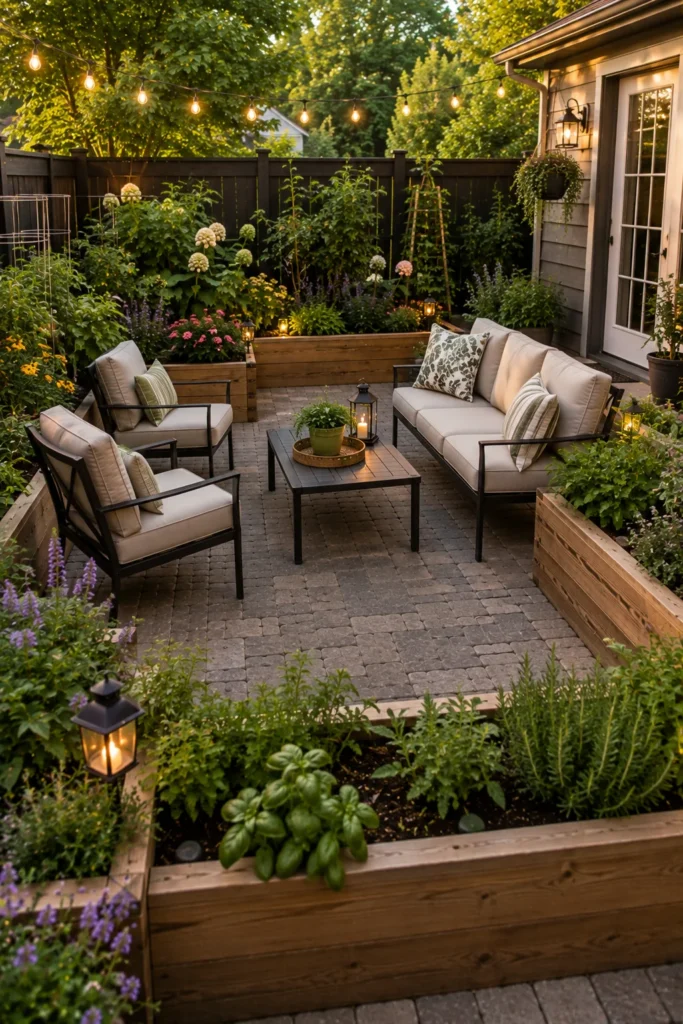
Combine outdoor seating with gardening by placing raised beds along the outer edges of your patio. This works especially well if you enjoy growing flowers, herbs, or vegetables.
Keep the beds outside the main walking route. Use different plant heights to create a green border around the sitting area.
A few helpful options:
- Raised Garden Bed: Creates a clear planting area around the patio.
- Herb Plants: Add useful greenery that can also be harvested for cooking.
- Garden Soil Mix: Gives container and raised-bed plants a suitable growing medium.
12. Simple Gravel Patio on a Budget
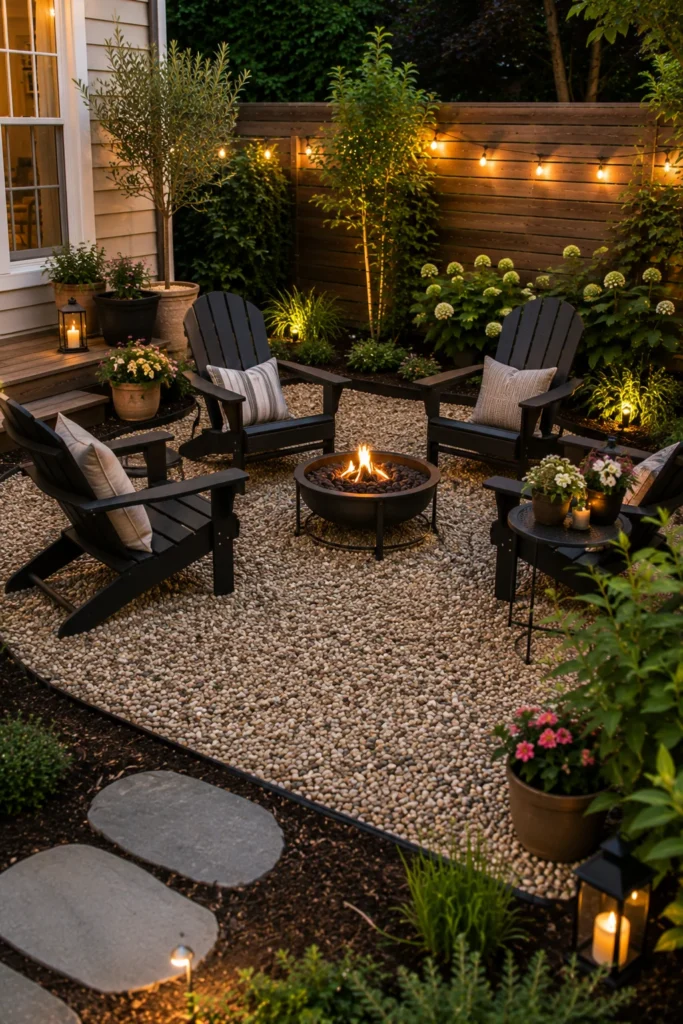
Gravel can be a practical choice when you want a patio without a large paving project. It is especially useful for informal seating areas and small backyard corners.
Remove existing grass, level the ground, and install a suitable base before adding the gravel. Finish with simple furniture and plants.
A few helpful options:
- Decorative Patio Gravel: Creates an affordable surface for casual outdoor seating.
- Landscape Fabric: Helps separate the gravel from the soil underneath.
- Patio Edging: Keeps the gravel contained and gives the area a cleaner outline.
13. Patio With a Natural Privacy Screen
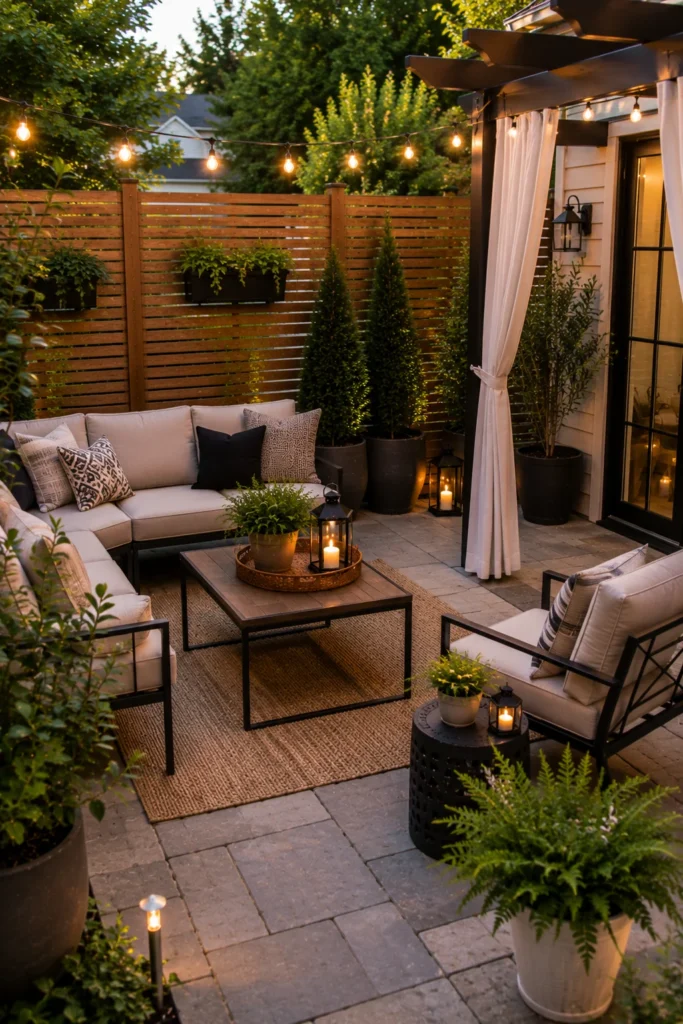
Make your patio more comfortable by adding privacy along one side. You can use a wooden screen, slatted panels, tall plants, or a combination of both.
Avoid closing the whole patio in. A partially open screen can provide privacy while allowing sunlight and airflow to reach the space.
A few helpful options:
- Wooden Privacy Screen: Creates a simple visual barrier around the seating area.
- Tall Potted Plants: Add privacy while keeping the design soft and natural.
- Outdoor Curtains: Give covered patios a flexible way to block views when needed.
14. Patio With Warm Evening Lighting
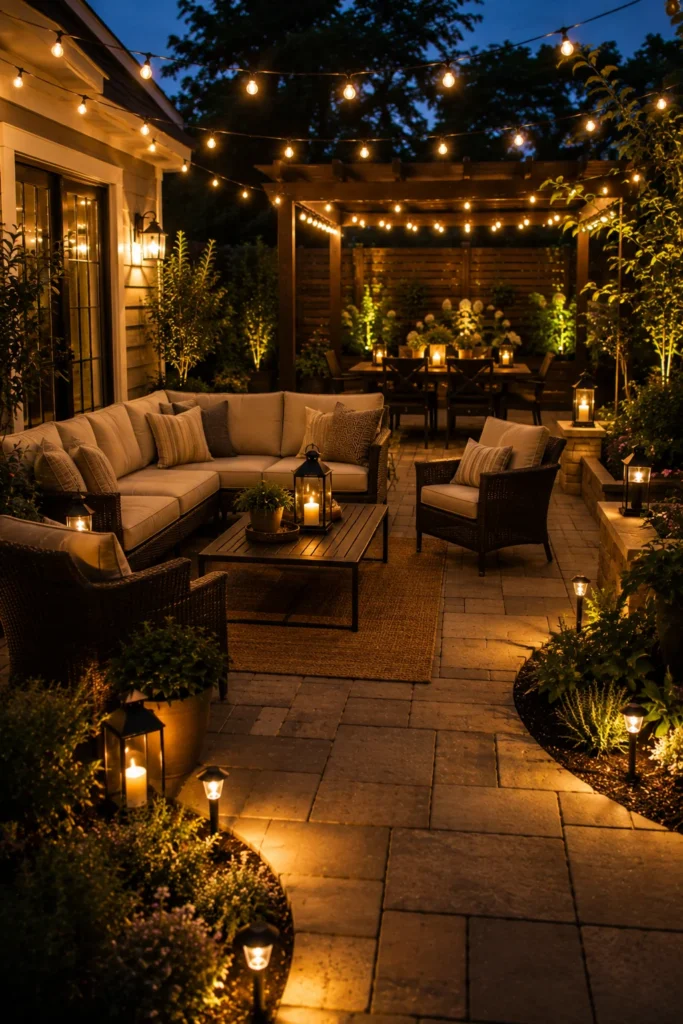
Good lighting can make a patio feel completely different after sunset. Instead of using one bright light, combine several smaller sources around the space.
Hang lights above the seating area and use small garden lights around pathways and plants.
A few helpful options:
- Warm String Lights: Add a soft glow above seating and dining areas.
- Solar Garden Lights: Illuminate paths and planting borders without complicated wiring.
- Outdoor Lanterns: Provide decorative light on tables, steps, or patio corners.
15. Modern Patio With Large Pavers
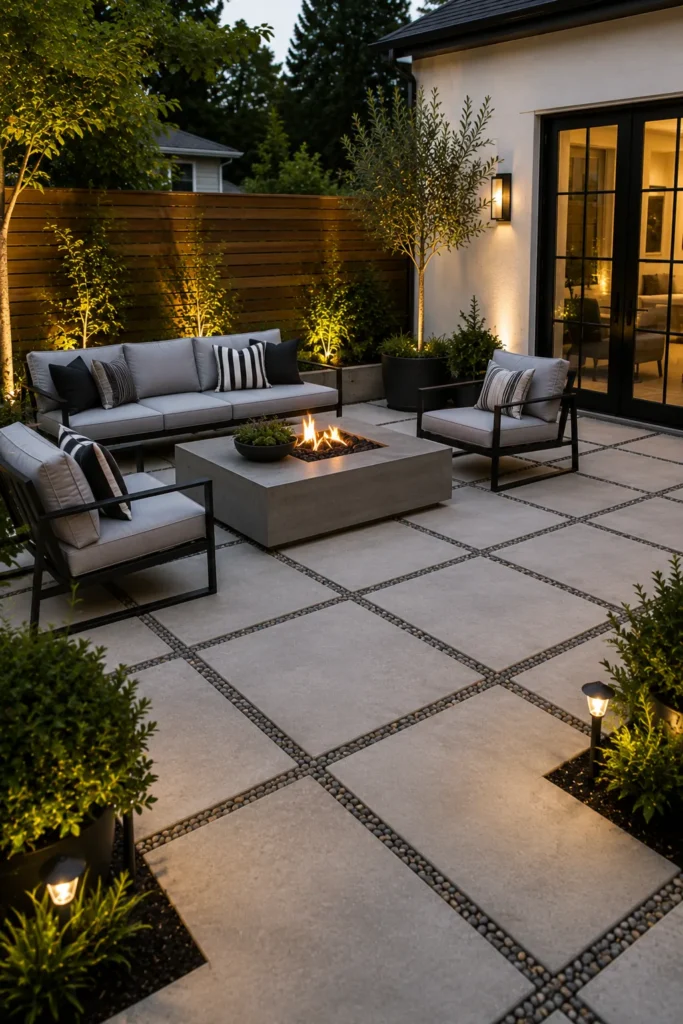
Large-format pavers can give your patio a clean and spacious appearance. They work especially well with simple furniture and carefully placed greenery.
Keep the gaps between pavers consistent and use gravel or small plants between selected areas if you want a softer look.
A few helpful options:
- Large Concrete Pavers: Create a neat foundation with fewer visible joints.
- Modern Outdoor Chairs: Keep the furniture simple so the paving remains part of the design.
- Gravel Joint Filler: Adds texture between paving slabs and helps define their layout.
16. Colorful Patio With Flower Containers
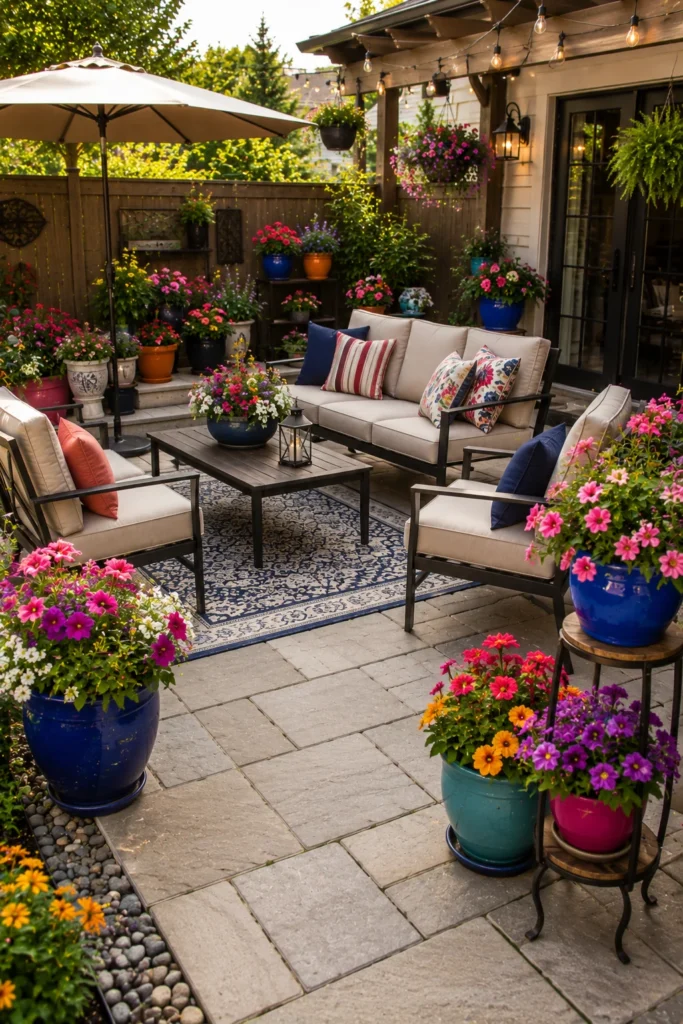
Bright flower containers can bring life to a patio that feels plain or mostly neutral. You can use colorful pots or keep the pots simple and let the flowers provide the color.
Place the brightest containers where they can be seen from the seating area. Repeat a few flower colors so the space still feels coordinated.
A few helpful options:
- Colorful Plant Pots: Add instant personality around seating and walkways.
- Seasonal Flower Plants: Bring changing color to the patio throughout the year.
- Plant Stands: Raise smaller pots to different heights and make the arrangement more interesting.
17. Covered Patio With an Outdoor Sofa
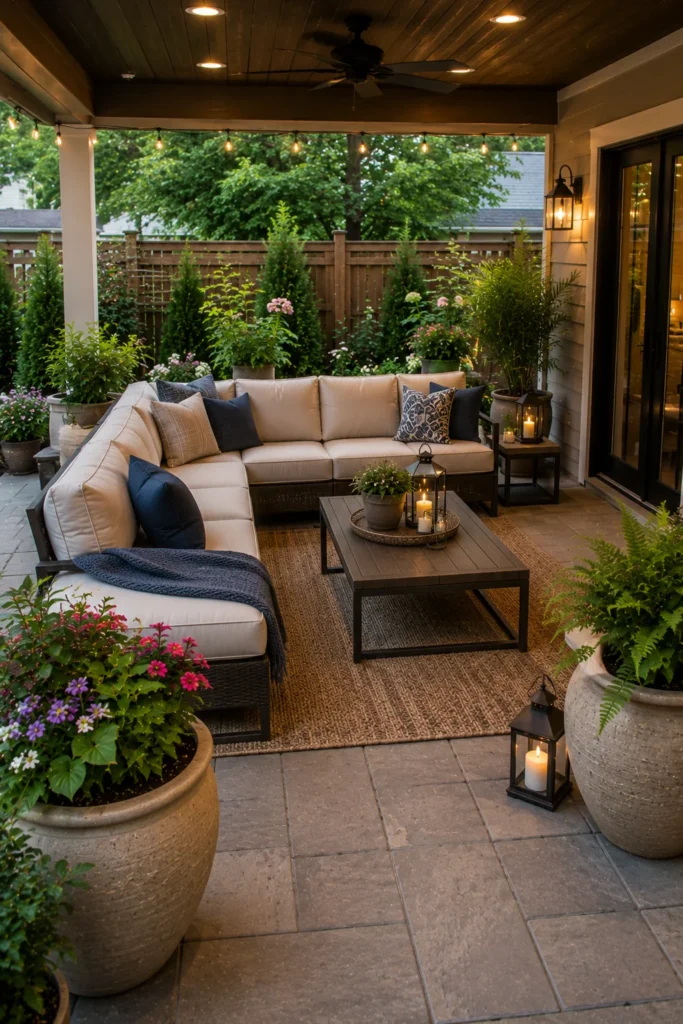
A covered patio can work like an outdoor living room. Start with a comfortable sofa and build the rest of the design around it.
Add a coffee table in front and place large planters around the outside edges. Keep fabrics in weather-resistant materials whenever possible.
A few helpful options:
- Outdoor Sectional Sofa: Provides generous seating for relaxing or entertaining.
- Weatherproof Cushions: Add comfort while being better suited to outdoor conditions.
- Large Decorative Planters: Fill empty corners and connect the seating area with the garden.
18. Patio With a Small Water Feature
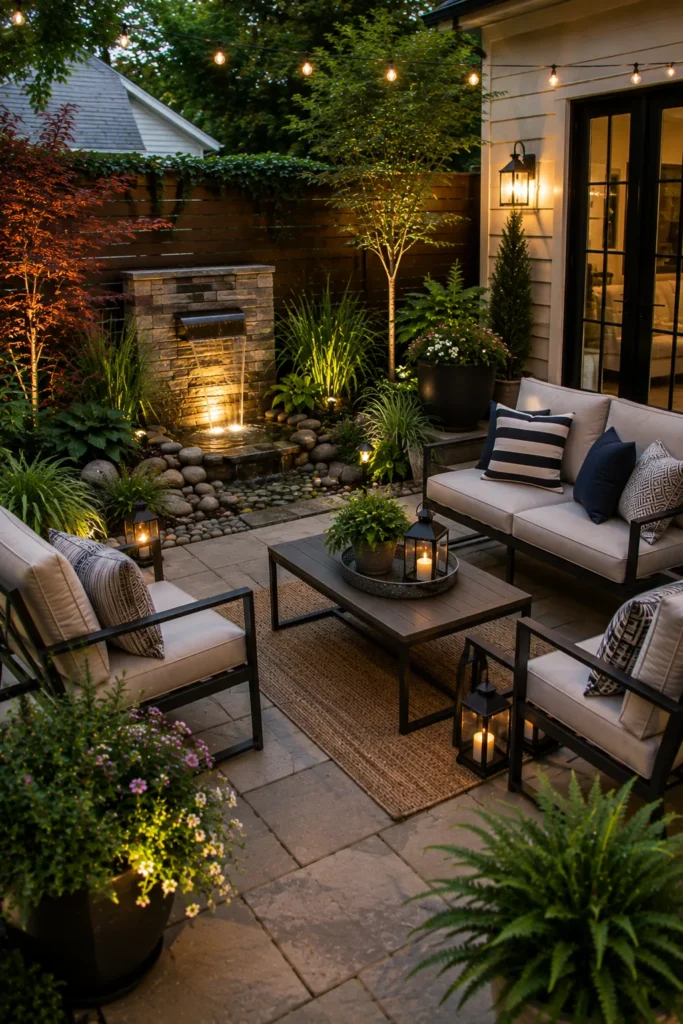
A small water feature can add movement and gentle background sound without requiring a full pond. It is a good option for patios where space is limited.
Place the feature where it can be seen from the main seating area. Surround it with stones and moisture-friendly plants for a natural appearance.
A few helpful options:
- Compact Garden Fountain: Adds the sound and movement of water to a small patio.
- River Stones: Help the water feature blend with the surrounding garden.
- Water-Friendly Plants: Soften the edges and make the feature feel more natural.
19. Rustic Patio With Wooden Planters
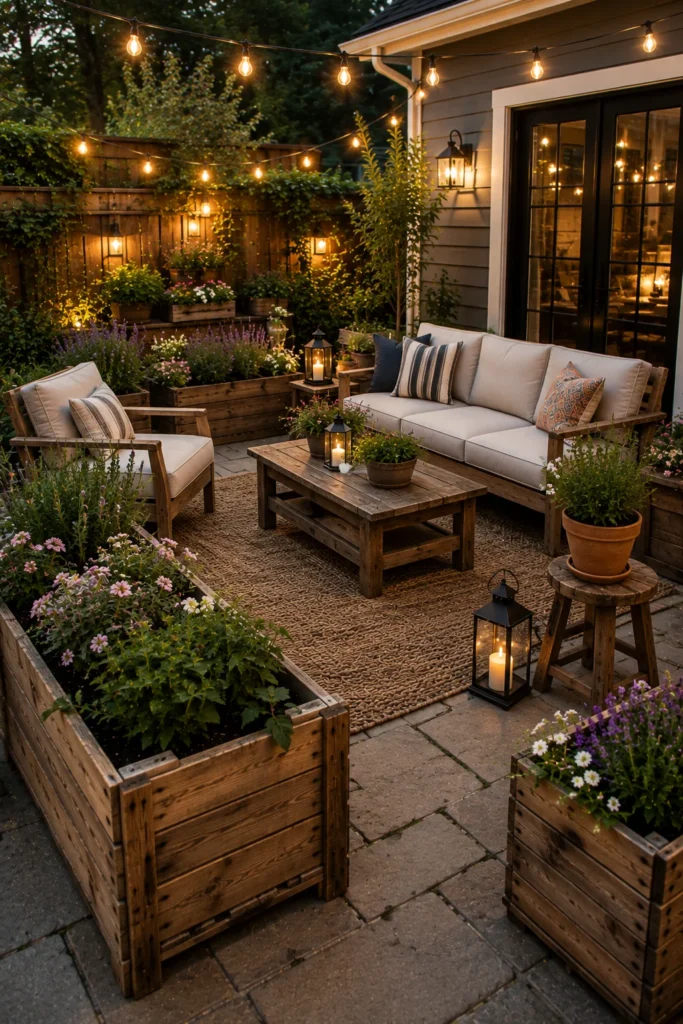
Wooden planters can give a patio a warm, relaxed character. Use them for herbs, flowers, or small leafy plants around the seating area.
Choose planters with drainage holes and place them where they receive the right amount of sunlight for the plants you select.
A few helpful options:
- Wooden Planter Boxes: Add natural texture while providing space for flowers and herbs.
- Outdoor Herb Pots: Keep useful herbs close to the patio dining area.
- Rustic Wooden Stool: Can work as a small plant stand or extra side surface.
20. Patio With a Built-In Planting Strip
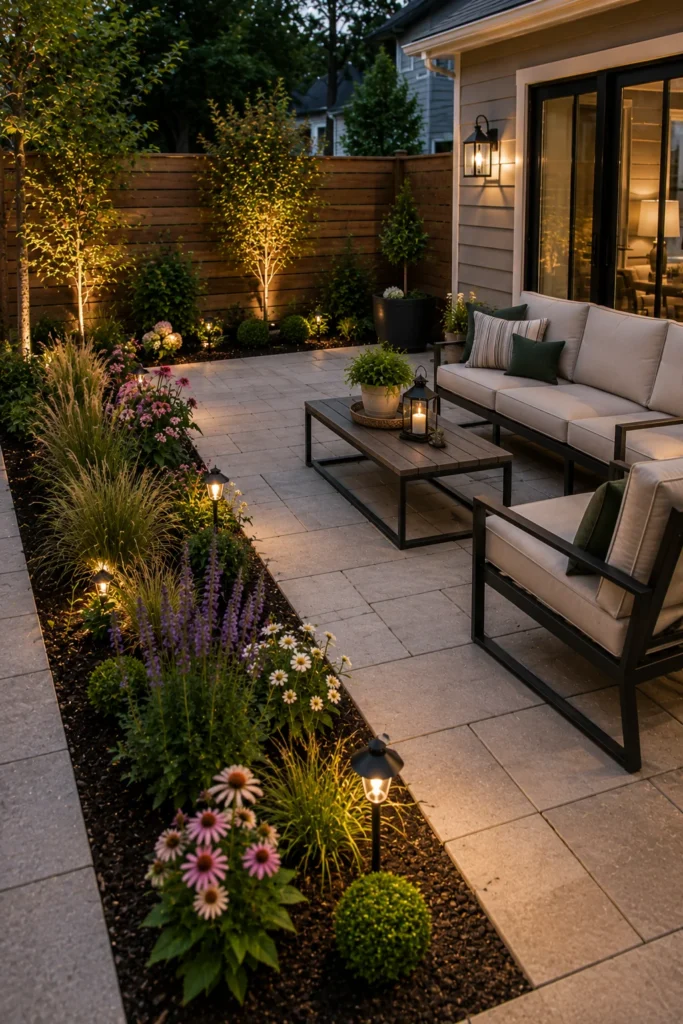
Instead of paving every inch of the patio, leave a narrow planting strip along one edge. This small garden space can make a large difference to the overall appearance.
Fill it with grasses, flowering plants, or compact shrubs. Choose plants that will not grow into the main walking area.
A few helpful options:
- Garden Border Plants: Create a soft green edge between the patio and garden.
- Ornamental Grass: Adds movement and height without requiring a large planting area.
- Mulch: Keeps the planting strip tidy and helps cover exposed soil.
21. Family Patio With Flexible Seating
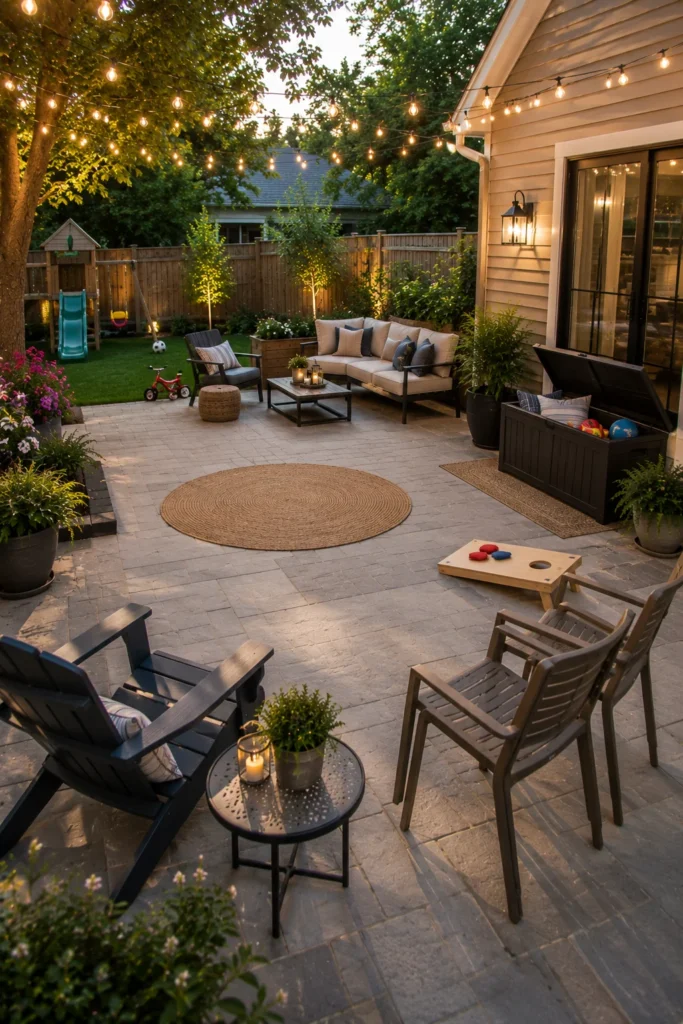
A family patio needs enough open space for people to move around comfortably. Instead of filling it with permanent furniture, use a combination of fixed and movable pieces.
Keep the main seating along one side and leave the center open. Lightweight chairs and small tables can be moved when you need extra room.
A few helpful options:
- Stackable Outdoor Chairs: Easy to move and store when you need more open space.
- Lightweight Side Tables: Can be moved around for meals, games, or gatherings.
- Outdoor Storage Box: Keeps cushions, toys, and small garden accessories organized.
22. Patio Connected to a Garden Path
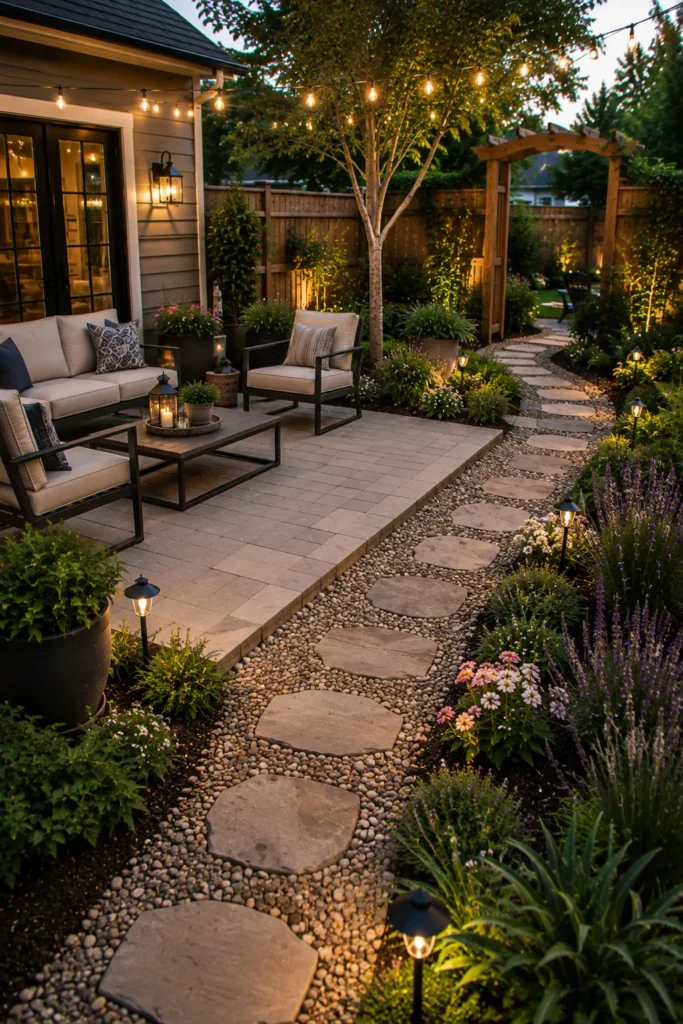
Connect your patio to another part of the backyard with a simple garden path. This makes the outdoor space feel more connected instead of treating the patio as a separate area.
Use stepping stones, brick, or gravel based on the style of your garden. Add low plants along the path without making it too narrow.
A few helpful options:
- Stepping Stones: Create a clear route between the patio and garden.
- Pathway Gravel: Works well around stones and gives the path a relaxed garden feel.
- Path Border Plants: Add greenery along the edges without blocking the walkway.
How to Put Your Outdoor Patio Design Together
Once you choose an idea, start with the largest elements first. Decide where the seating, dining table, or main feature will go before adding smaller decorations.
Keep clear walking paths between the patio, house, garden, and other outdoor areas. A beautiful patio should still be easy to move around.
Start With the Surface
The patio surface sets the foundation for everything else. Pavers, stone, gravel, brick, concrete, and decking can all create different looks.
Choose a surface that suits your home’s style and the amount of maintenance you are comfortable with.
Add the Main Furniture
After deciding on the layout, add your main seating or dining furniture. Measure each piece before buying it so you do not overcrowd the patio.
Try to leave enough room for chairs to move backward and for people to walk around the furniture.
Bring in Plants
Plants should complement the patio rather than make it difficult to use. Start with a few larger plants and then add smaller pots where there are empty spaces.
Before choosing plants, check how much direct sunlight each area receives. This simple step can prevent many common gardening problems.
Add Lighting and Accessories
Finish the patio with lighting, cushions, rugs, planters, and other small accessories. These details can make the space feel more personal without requiring a major renovation.
Choose a few colors and repeat them throughout the patio instead of using too many unrelated shades.
Make Your Patio Work for You
The Best outdoor patio is not necessarily the one with the most furniture or decorations. It is the one that fits your daily routine and gives you a reason to spend more time outside.
Start with one section of your backyard and improve it gradually. Add plants as they grow, change cushions with the seasons, and adjust the layout whenever your needs change.
With a little planning, even a simple patio can become a comfortable part of your home and a beautiful connection between your house and garden.