
I’ve always liked gardens that feel calm without needing too many decorations. When I work on a Japanese-style garden, I focus on a few simple things: natural materials, balanced planting, open space, and a layout that feels easy to walk through.
You don’t need a large backyard to bring this style into your garden. A few carefully chosen plants, stones, water, and wood can be enough to create a peaceful outdoor space.
Here are Japanese Garden Ideas that you can use in a small backyard, side garden, patio, or larger outdoor space. I’ve kept each idea practical so you can understand what to add, where to place it, and how to keep the garden looking natural.
1. Create a Simple Stone Path
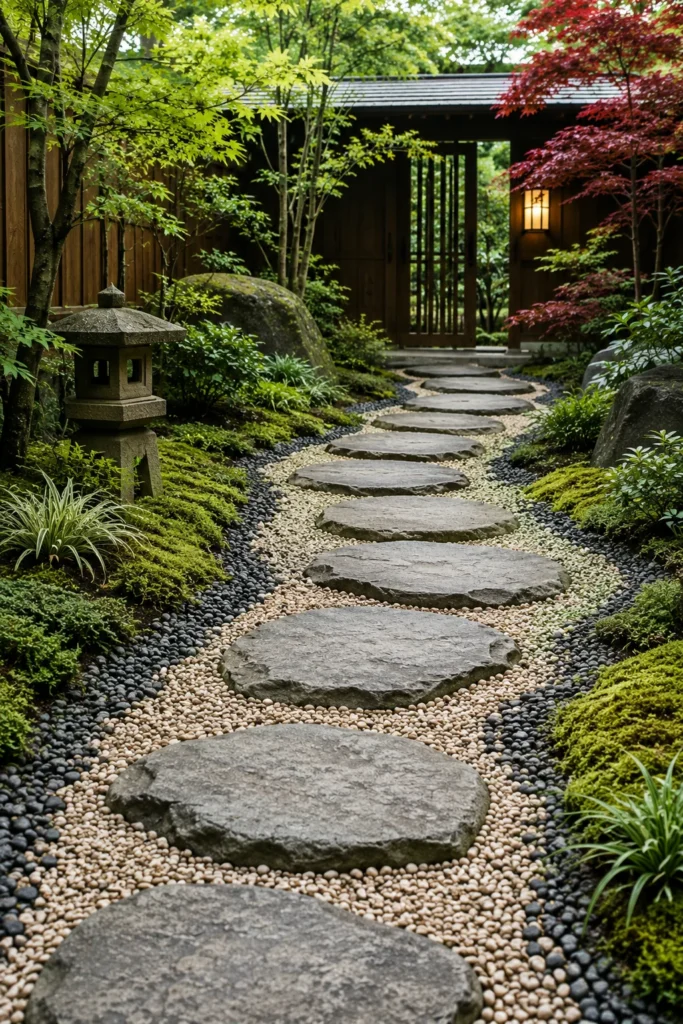
A stone path is one of the easiest ways to give a garden a Japanese-inspired look. I prefer placing stones with slightly different gaps instead of making the path look perfectly measured.
Use flat stepping stones and leave small spaces between them. Keep the path wide enough for comfortable walking, then soften both sides with moss, grasses, or low plants.
A few helpful options:
- Flat Stepping Stones: I use these as the main walking surface because they give the path a natural Japanese garden feel while remaining comfortable to walk on.
- Fine Garden Gravel: Fill the spaces around the stones with gravel to keep the path neat and help the stones stand out.
- Low-Growing Ground Cover: Plant it along the edges to soften the hard stone and make the path feel connected to the garden.
Also Check: 20+ Outdoor Patio Ideas to Make Your Backyard More Beautiful
2. Add a Small Japanese-Style Water Feature
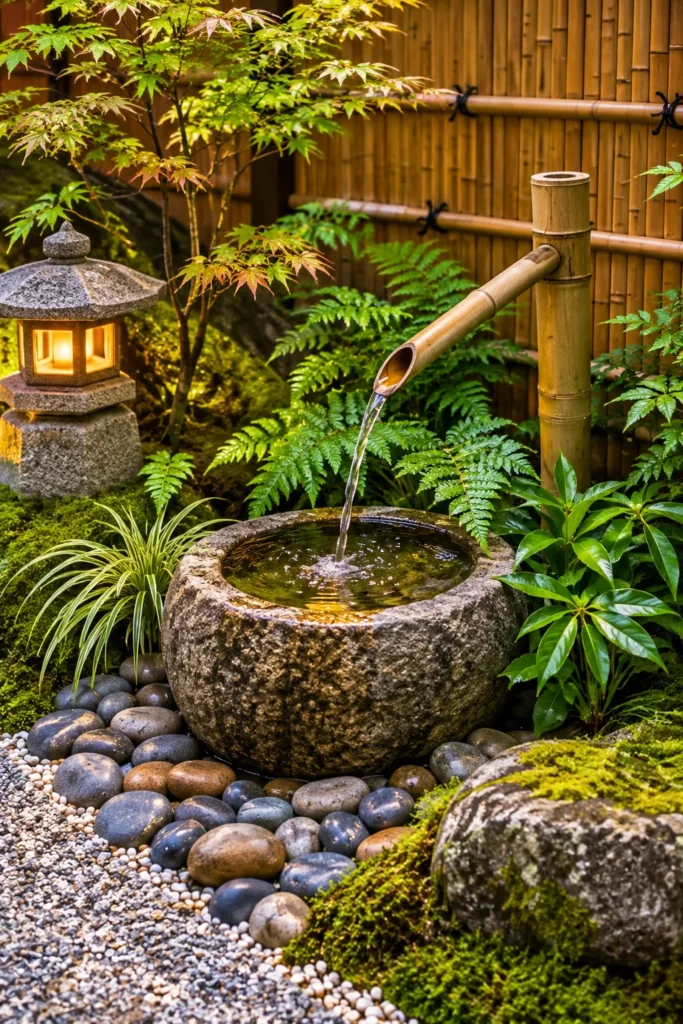
You don’t need a large pond to bring water into a Japanese garden. A small stone basin or simple bamboo water feature can work beautifully in a compact space.
Place it somewhere visible from a seating area. Surround the base with smooth stones and a few shade-friendly plants to make it feel connected to the garden.
A few helpful options:
- Stone Water Basin: I like using a small basin as the main feature because it adds water without taking up much garden space.
- Bamboo Water Spout: Add this above the basin for a gentle flow of water and a more natural Japanese-inspired appearance.
- Smooth River Stones: Place them around the base to hide the edges and connect the water feature with the rest of the garden.
3. Use Japanese Maple as a Focal Plant
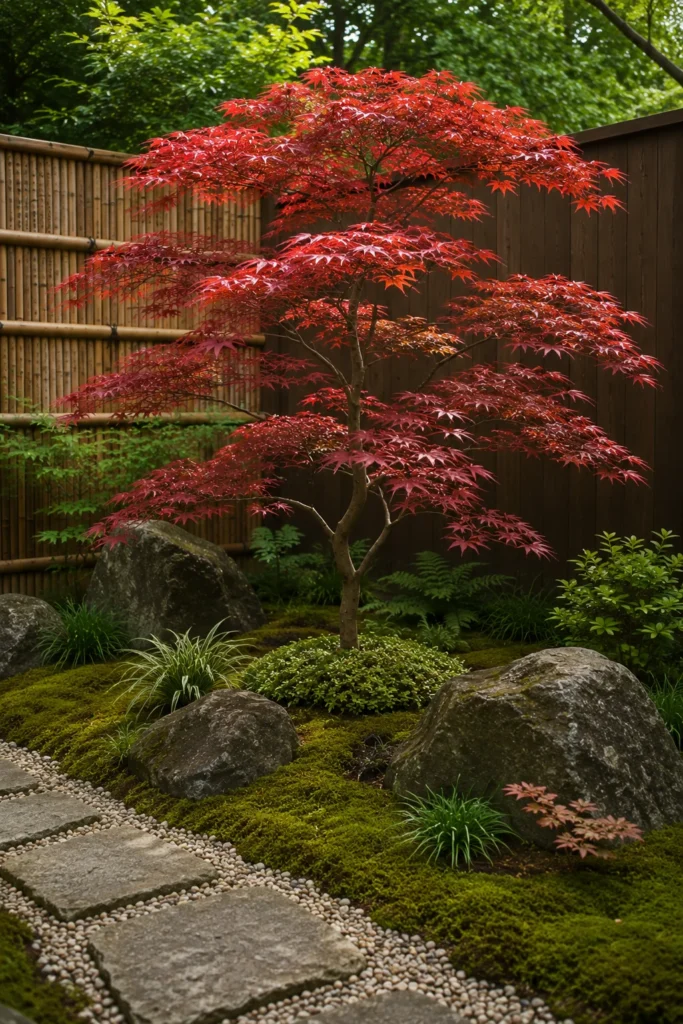
Japanese maple can become a beautiful focal point because of its delicate leaves and changing seasonal color.
Give it enough room to show its natural shape instead of surrounding it with too many plants. A few rocks and low ground-cover plants around its base are usually enough.
A few helpful options:
- Japanese Maple: Use one healthy tree as the main focal point rather than planting several in the same area.
- Natural Garden Rocks: Place a few rocks around the tree to give the planting area more structure.
- Ground-Cover Plants: Keep low plants around the base so the tree remains the main feature.
4. Build a Small Gravel Garden
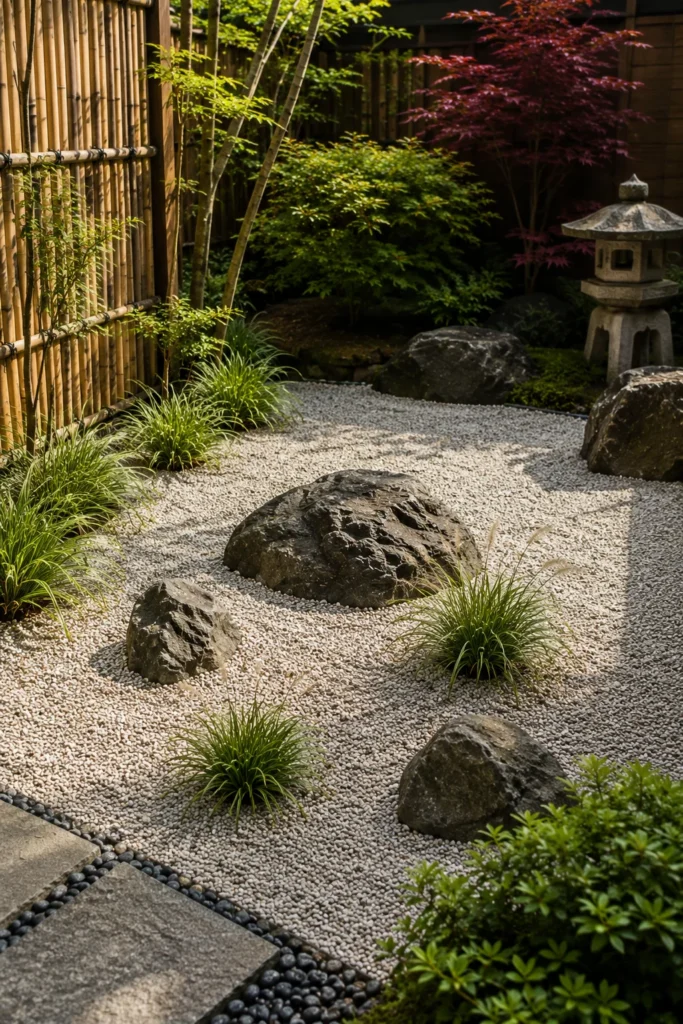
For a low-maintenance section, use fine gravel as the main ground cover and add a few carefully placed rocks.
Keep the planting simple. A small group of grasses or one sculptural shrub can provide enough greenery without making the area feel crowded.
A few helpful options:
- Fine Gravel: Use it as the main ground cover to create a clean, low-maintenance surface.
- Large Feature Rocks: Place a small number of larger rocks into the gravel instead of filling the whole area with stones.
- Ornamental Grass: Add a few grass clumps to bring height and movement without making the garden busy.
5. Add a Bamboo Privacy Screen
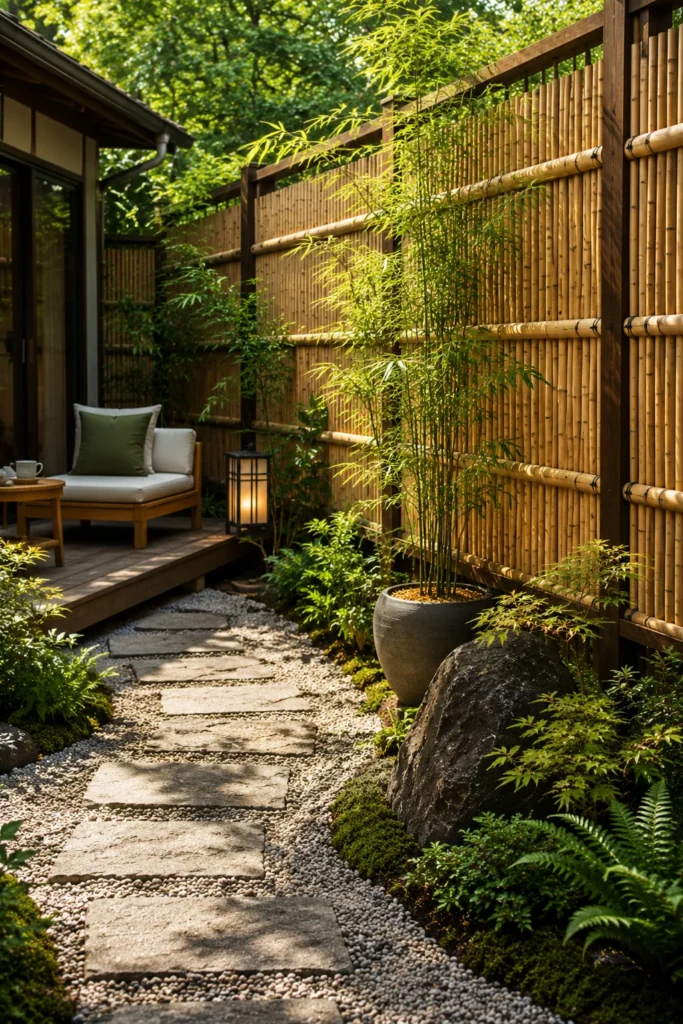
Bamboo can create privacy while keeping the garden feeling natural. It works particularly well along a fence, patio edge, or narrow side garden.
Use bamboo screening where you need a visual barrier rather than covering the entire garden. Leave some open areas so the space still feels bright.
A few helpful options:
- Bamboo Screening: I would use this along the most exposed side of the garden rather than blocking every view.
- Wooden Support Frame: Gives the bamboo screen a stable structure and helps keep it straight.
- Tall Potted Plants: Place a few in front of the screen to soften the hard edge and add another layer of greenery.
6. Make a Quiet Moss Corner
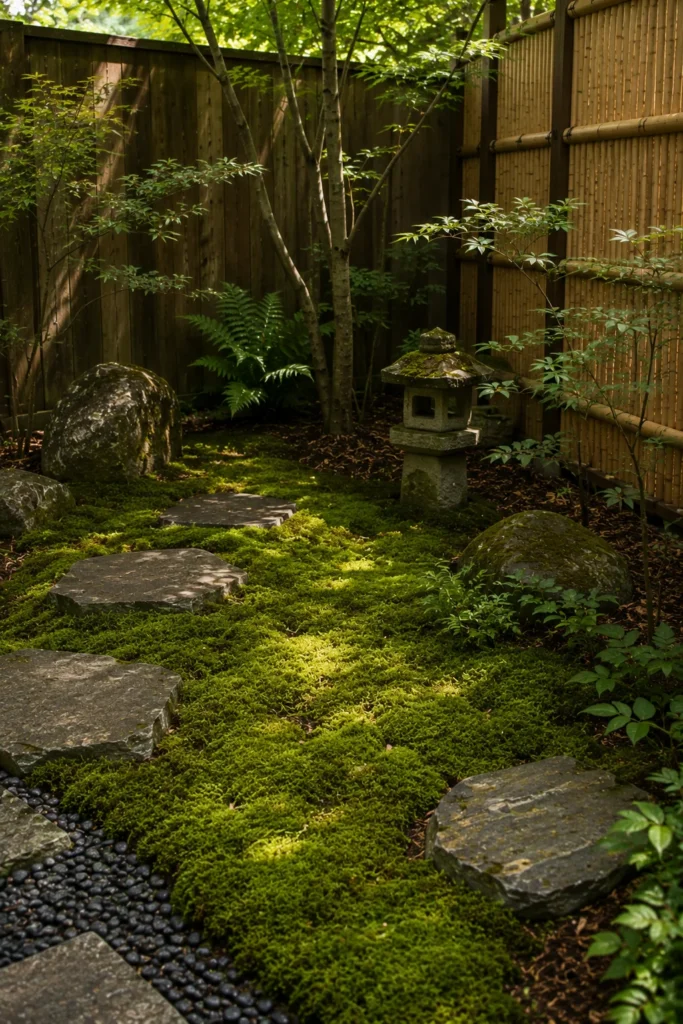
A shaded part of the garden can be turned into a simple moss garden. This works best in areas that stay naturally cool and moist.
Clear away weeds, improve the soil if necessary, and place a few stones around the moss. Avoid walking through this area so the moss can establish properly.
A few helpful options:
- Garden Moss: Use moss in a naturally shaded and moist area where it has a better chance of staying healthy.
- Flat Garden Stones: Place a few stones around the moss without covering too much of the planting area.
- Leaf Mulch: A thin layer around nearby plants can help the soil retain moisture and keep the corner looking natural.
7. Use Large Rocks as Garden Features
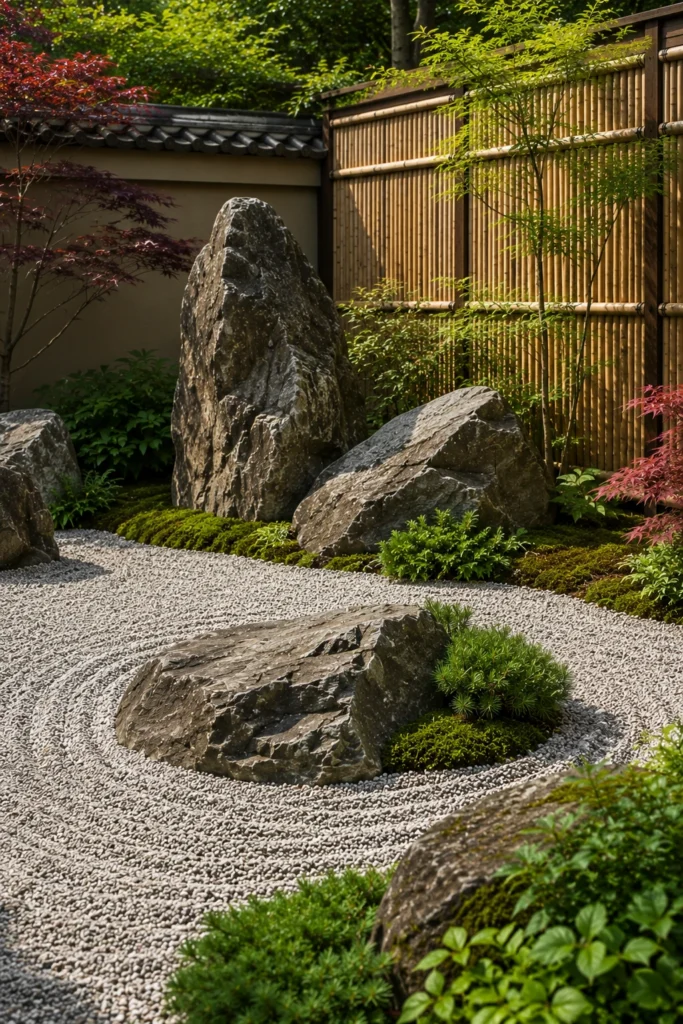
Large rocks can give a Japanese garden structure without adding artificial decorations. Their position matters more than the number of rocks you use.
Choose a few stones with different shapes and partially set them into the soil. Avoid placing every rock upright; a mixture of angles looks more natural.
A few helpful options:
- Natural Landscape Rocks: Choose stones with different shapes and partially bury them so they look as though they belong there.
- Fine Gravel: Use gravel around the rocks to make each stone easier to see.
- Low Evergreen Plants: Place them near the rocks to soften their edges without hiding them.
8. Add a Wooden Garden Bridge
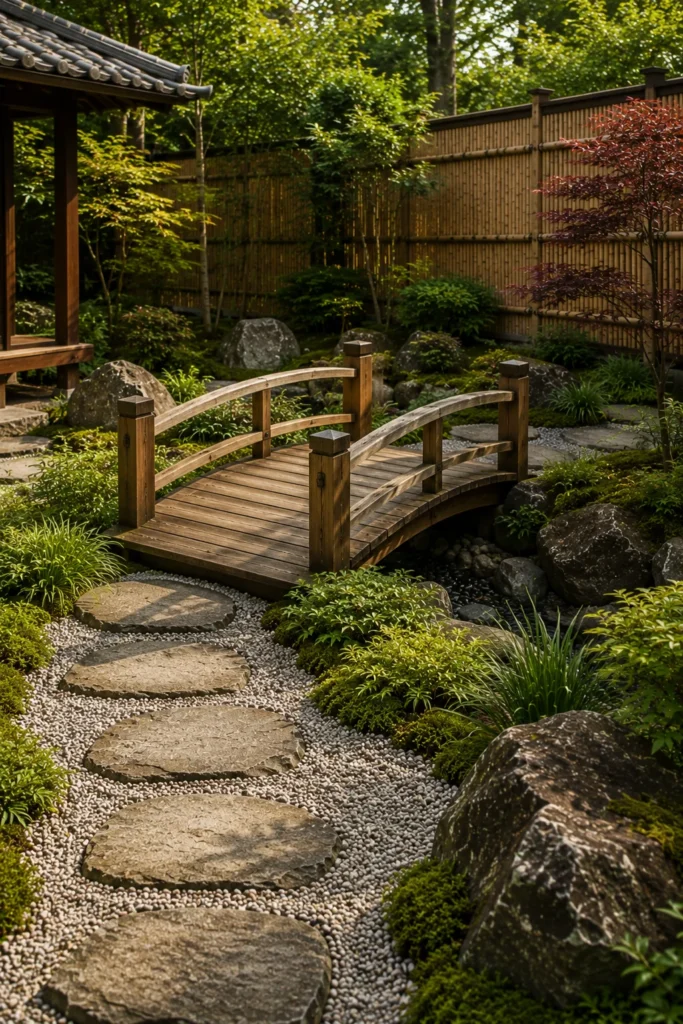
A small wooden bridge can make even a simple garden path feel more interesting. It does not need to cross water; it can simply pass over a gravel bed or planting area.
Use natural-looking wood and keep the design simple. Place plants or rocks around both ends so the bridge feels like part of the garden rather than an object placed on top of it.
A few helpful options:
- Simple Wooden Bridge: Use a plain design with natural wood so the bridge does not overpower the garden.
- Stepping Stones: Place a few stones before and after the bridge to create a smooth walking route.
- Low Border Plants: Add plants around the ends to make the bridge look connected to the landscape.
9. Plant Ornamental Grasses
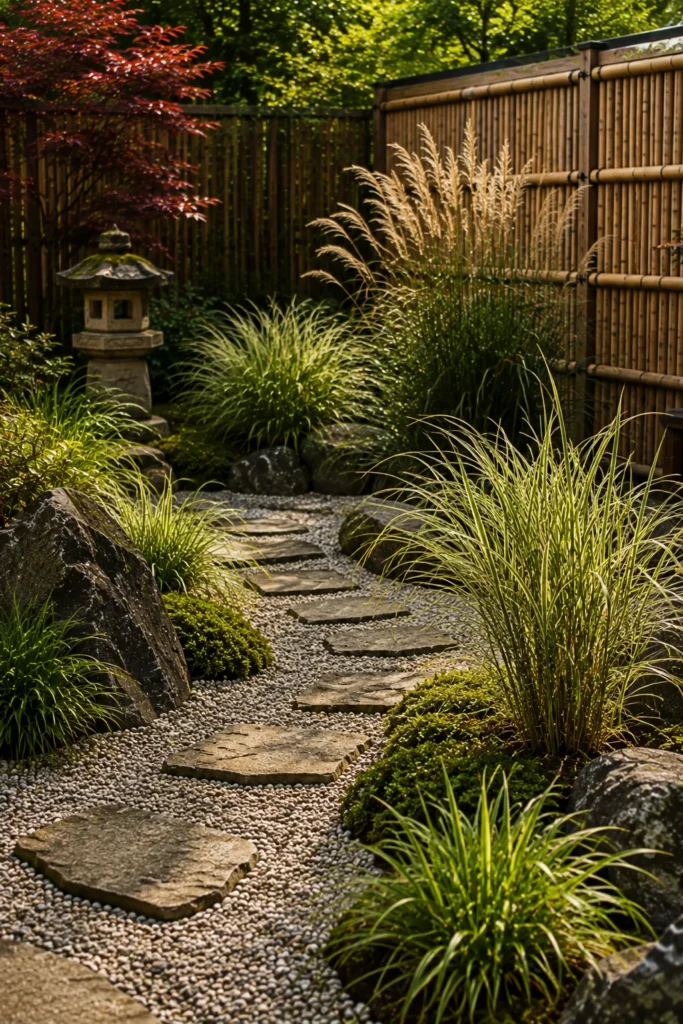
Ornamental grasses are useful when you want movement without adding too many flowers. Their fine leaves work especially well beside stones and gravel.
Plant them in small groups rather than scattering single plants everywhere. Leave enough space around each group so the grasses can develop naturally.
A few helpful options:
- Japanese Forest Grass: Its soft, arching leaves work nicely around paths, rocks, and shaded garden areas.
- Tall Ornamental Grass: Use it toward the back of the planting area to add height without blocking the whole view.
- Garden Gravel: Spread gravel around the grass groups to keep the planting area defined and tidy.
10. Create a Tea Garden Entrance
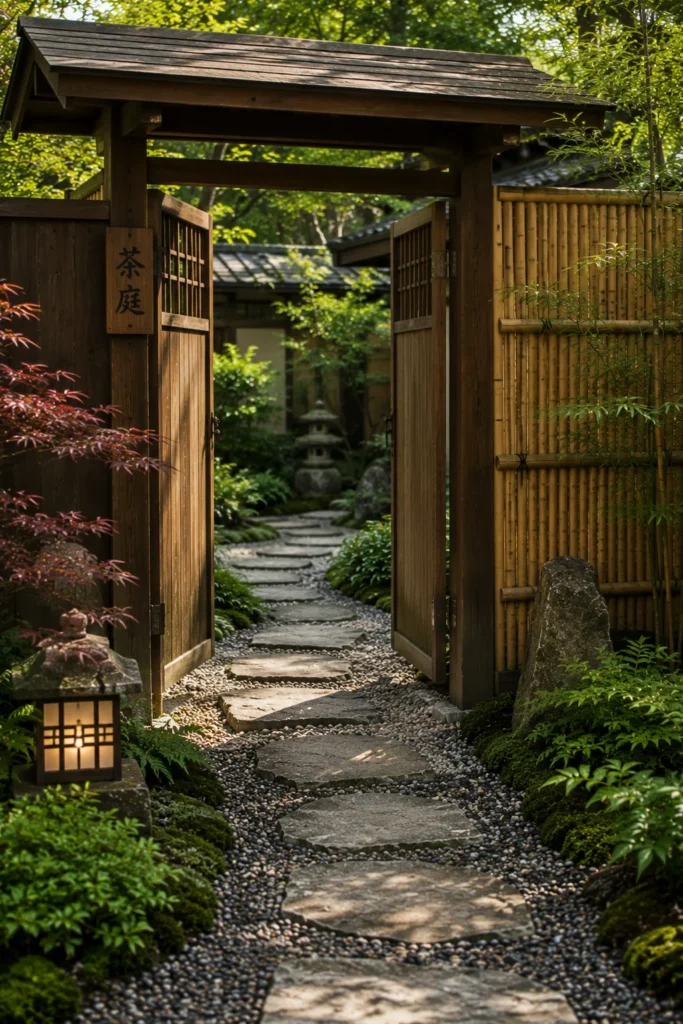
Give your garden a small entrance that feels separate from the rest of the yard. A simple wooden gate, stone path, or bamboo screen can create this transition.
Keep the entrance uncluttered. A couple of stepping stones and some greenery are often enough to make the area feel special.
A few helpful options:
- Wooden Garden Gate: Use a simple gate to mark the entrance without making it feel too formal.
- Stepping Stones: Lead visitors from the entrance toward the main garden area.
- Bamboo Screen: Add one beside the entrance if you want the garden to feel more private and separated from the rest of the yard.
11. Add a Stone Lantern
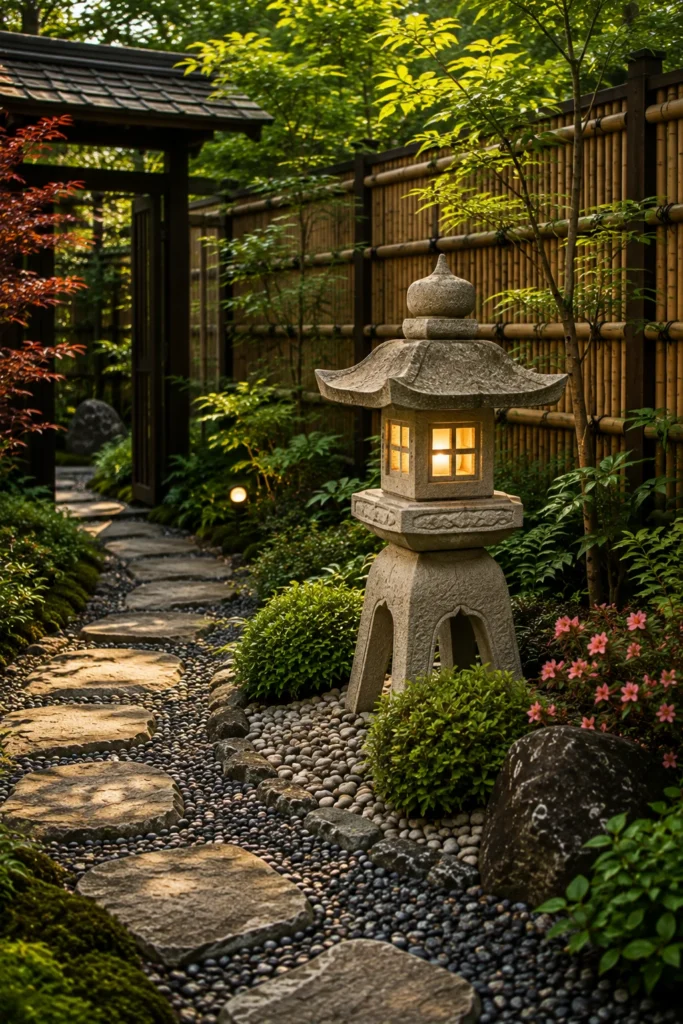
A stone lantern can work as a small architectural feature in a Japanese-style garden. Place it where it can be seen from a path or seating area rather than hiding it among too many plants.
Use plants and rocks around the base to connect it with the surrounding garden.
A few helpful options:
- Japanese-Style Stone Lantern: Use it as a visual focal point beside a path or near a water feature.
- Low Shrubs: Plant them around the base but leave the lantern clearly visible.
- Decorative Pebbles: Add a small layer around the lantern to create a clean transition between the feature and garden soil.
12. Use Evergreen Shrubs for Structure
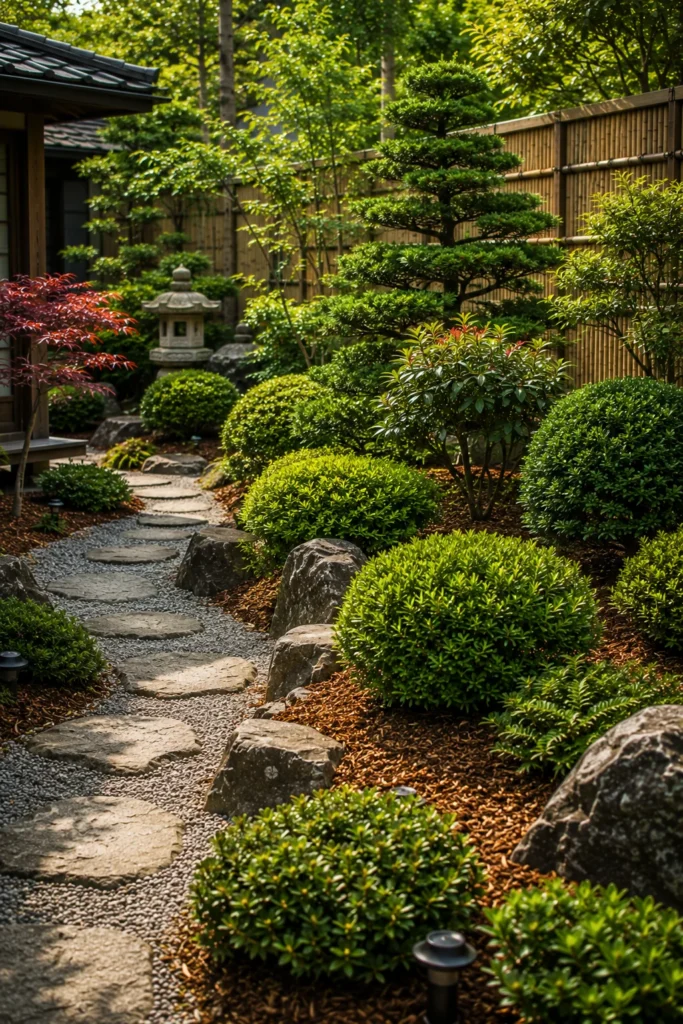
Evergreen shrubs help keep the garden looking balanced throughout the year. They are especially useful when you want a calm background behind rocks, paths, or water features.
Choose shrubs that suit your climate and available space. Prune them lightly to maintain their natural form instead of forcing them into complicated shapes.
A few helpful options:
- Evergreen Shrubs: Choose varieties that suit your climate and use them to provide year-round greenery.
- Hand Pruning Shears: Light pruning helps maintain the plant’s natural shape and remove unwanted growth.
- Organic Mulch: Spread it around the shrubs to help retain soil moisture and keep the planting bed tidy.
13. Add a Small Koi Pond
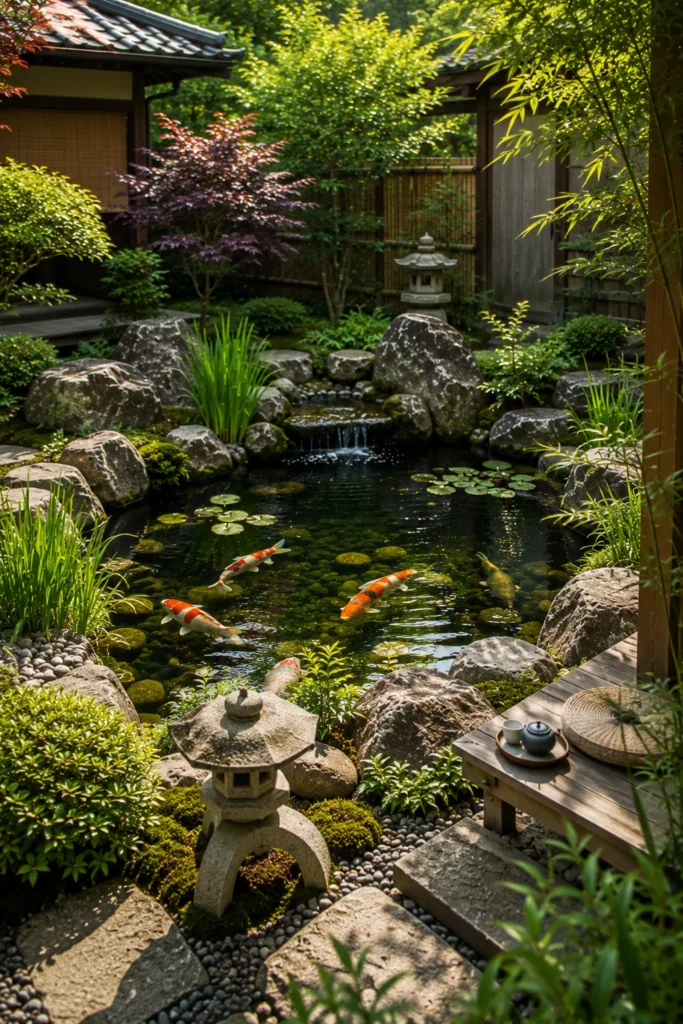
If your yard has enough room, a small koi pond can become the main feature of a Japanese-inspired garden.
Keep the pond shape natural and surround it with rocks and suitable plants. Add a shallow viewing area if possible so the fish and water can be enjoyed from nearby seating.
A few helpful options:
- Compact Pond Liner: Use a proper pond liner to create a reliable waterproof base for the pond.
- Aquatic Plants: Add suitable water plants around the edges to make the pond feel more natural.
- Natural Pond Rocks: Place different-sized rocks around the border to soften the pond’s edges.
14. Create a Dry River Bed
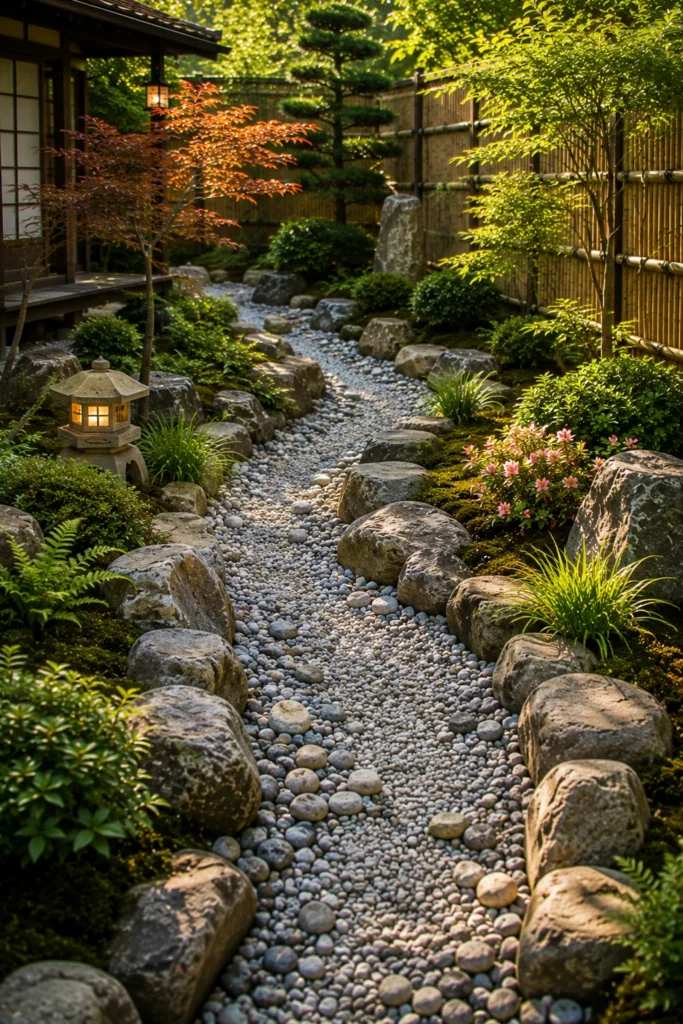
A dry river bed is a practical way to add the feeling of flowing water without installing a pond.
Use larger stones along the sides and smaller gravel through the center. Curve the layout slightly instead of making it perfectly straight, then add a few plants along the edges.
A few helpful options:
- Large River Rocks: Use these along the sides to define the shape of the dry river bed.
- Small Decorative Gravel: Fill the center with smaller stones to create the appearance of a natural stream.
- Low Border Plants: Add small groups along the edges so the dry river bed blends into the surrounding garden.
15. Add a Wooden Bench for Quiet Seating
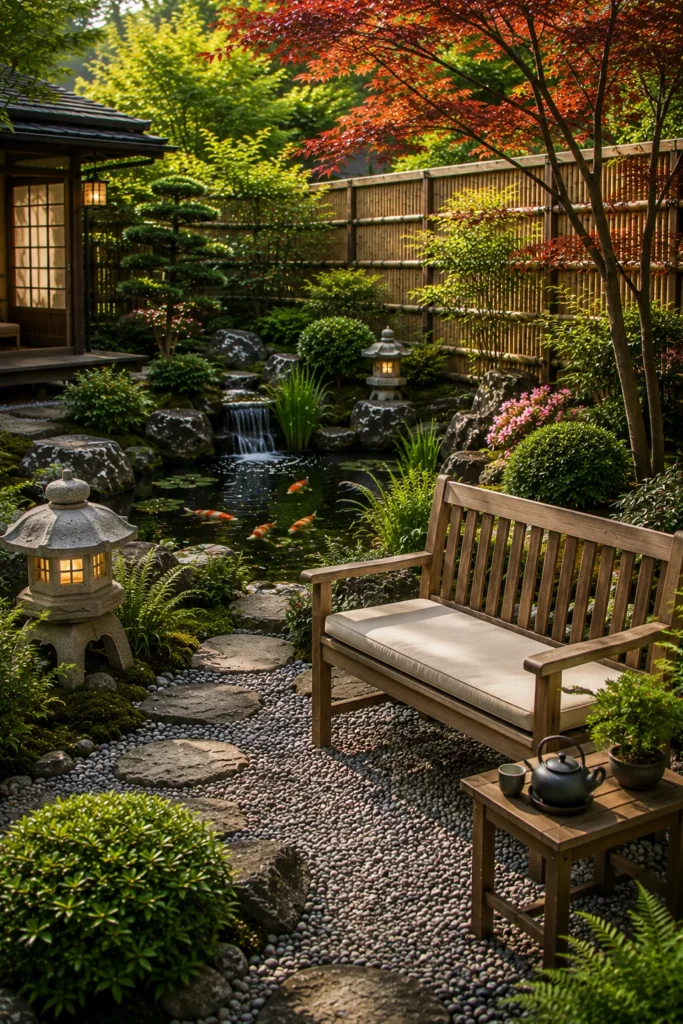
A simple wooden bench gives you a place to sit without taking attention away from the garden.
Place it near a maple, water feature, or open gravel area where you can see several parts of the garden at once. Keep the surrounding planting low enough to preserve the view.
A few helpful options:
- Simple Wooden Bench: Place it where you can comfortably see the main garden feature without blocking a pathway.
- Outdoor Seat Cushion: Add one if you plan to spend longer periods sitting in the garden.
- Small Side Table: Keep a simple table nearby for tea, books, or a small plant.
16. Combine Gravel With Stepping Stones
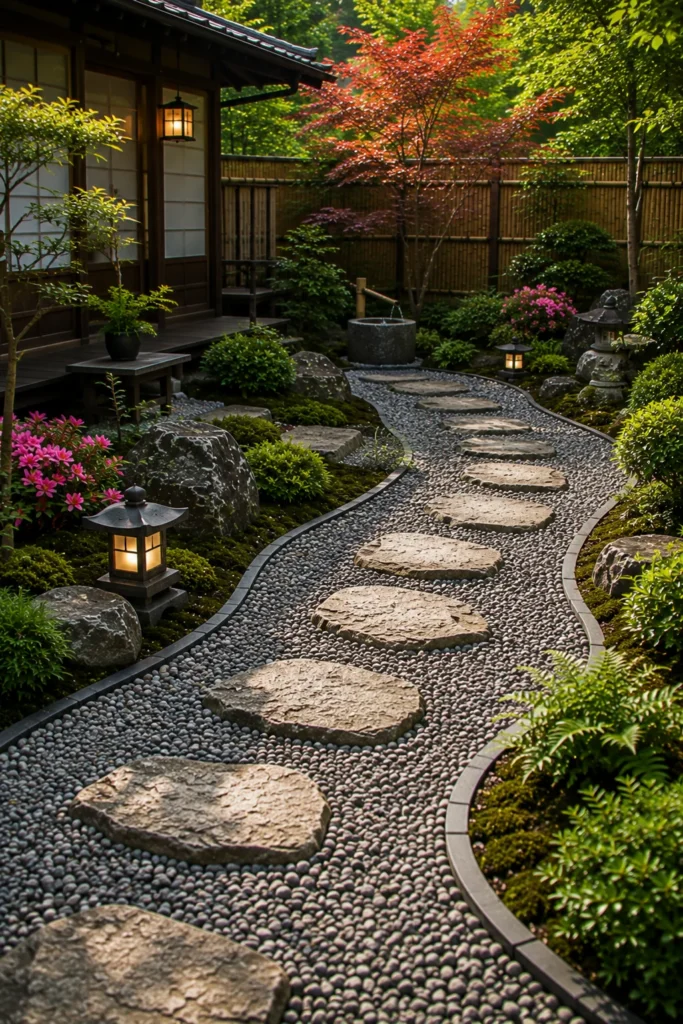
Gravel and stepping stones make a simple combination for paths and small sitting areas.
Spread the gravel evenly and place the stones so each step feels comfortable. Use a firm base underneath the stepping stones to prevent them from shifting over time.
A few helpful options:
- Flat Stepping Stones: Choose stones that provide a stable surface for each step.
- Pea Gravel: Use small gravel around the stones because it is comfortable to walk around and easy to maintain.
- Landscape Edging: Install edging along the path to stop gravel from spreading into nearby planting beds.
17. Create a Bamboo and Fern Corner
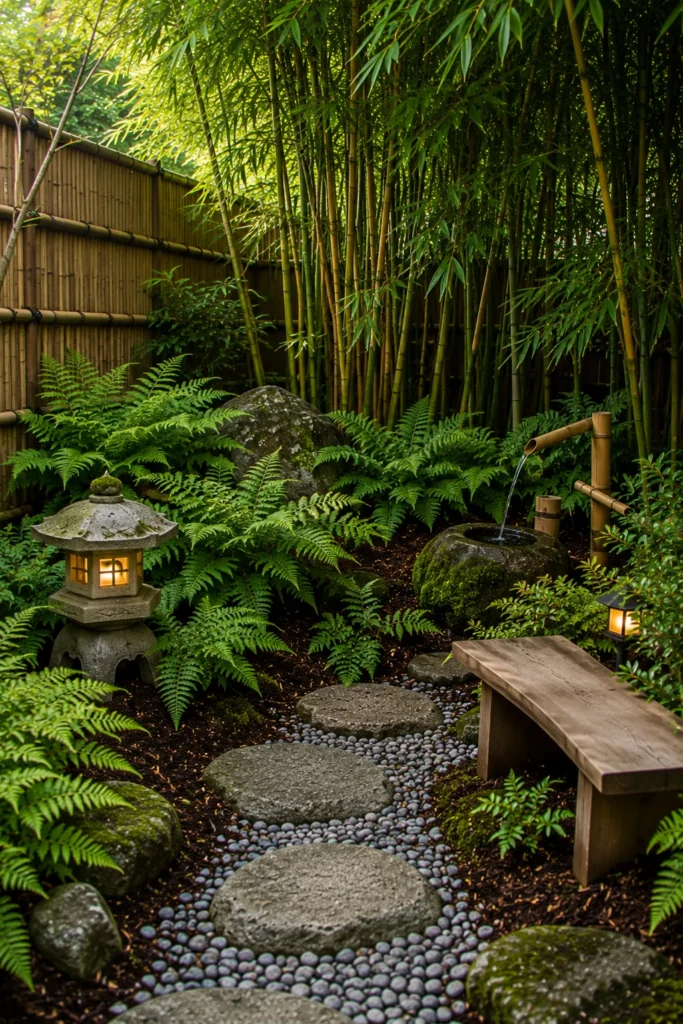
For a shaded backyard section, combine bamboo with ferns and other shade-tolerant plants.
Keep the bamboo toward the back and use lower plants in front. This creates layers without needing lots of different plant varieties.
A few helpful options:
- Clumping Bamboo: Use a suitable clumping variety where possible to make maintenance easier and prevent unwanted spreading.
- Fern Plants: Place ferns in front of the bamboo to create a softer lower layer.
- Organic Mulch: Cover the soil around the plants to help retain moisture, especially in a shaded garden.
18. Use a Simple Wooden Fence
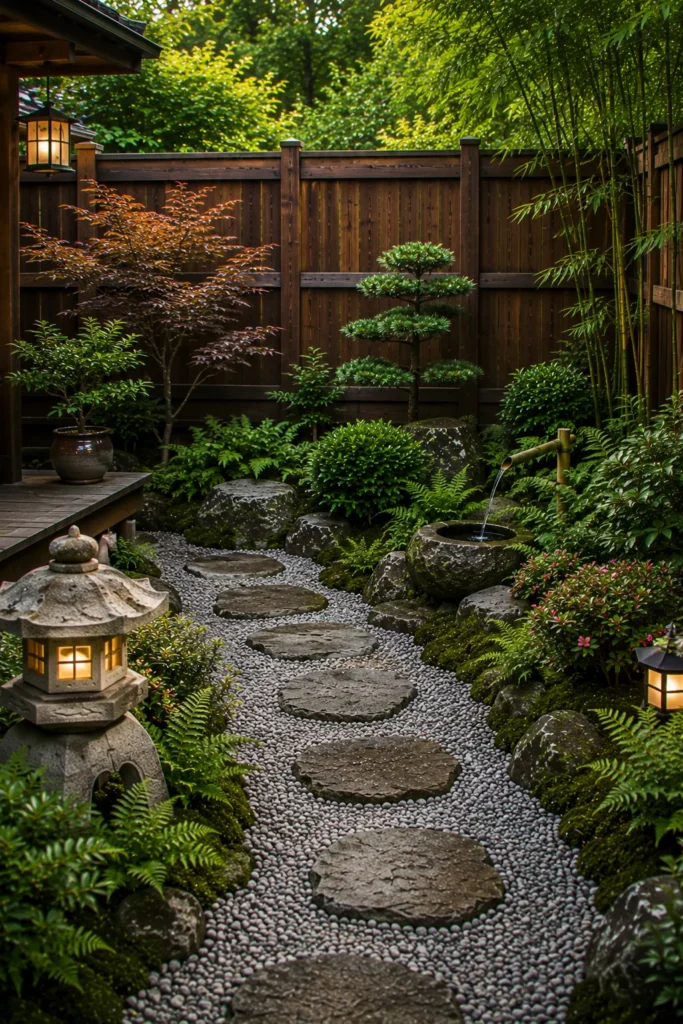
A natural wood fence can provide a quiet background for Japanese-style planting. Darker wood can also make green foliage stand out.
Avoid adding too many decorative details to the fence. Let the texture of the wood, plants, and stones do most of the work.
A few helpful options:
- Natural Wood Fence Panels: Use them as a quiet background that lets plants and stones stand out.
- Outdoor Wood Stain: A suitable exterior stain can protect the wood while giving it a deeper, natural tone.
- Evergreen Plants: Plant greenery in front of the fence to break up the straight wooden surface.
19. Make a Small Zen-Style Sitting Area
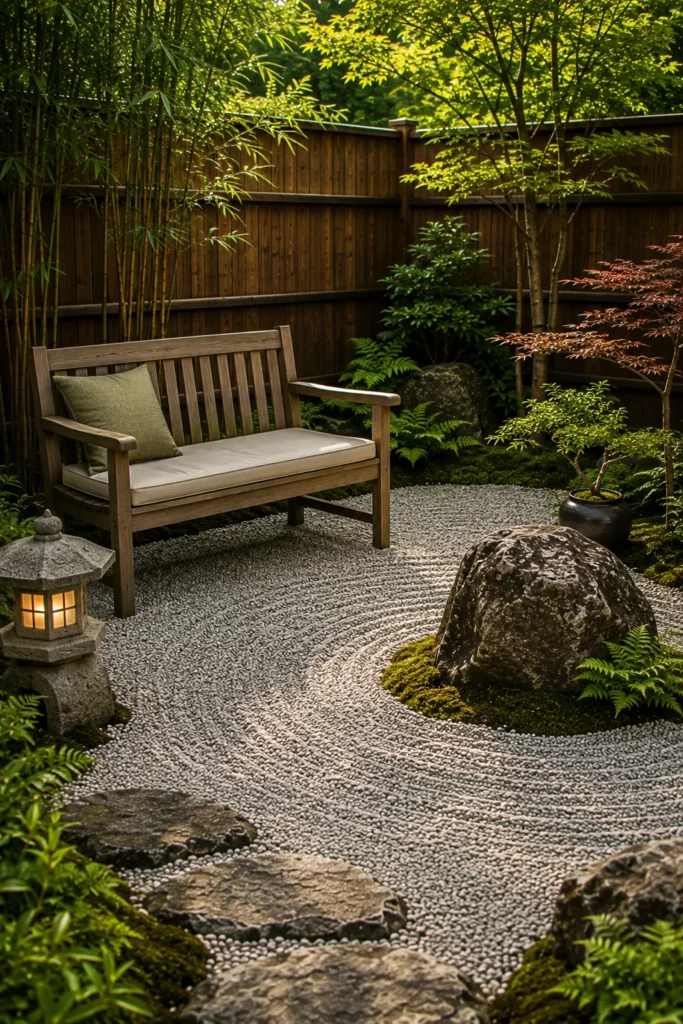
You can create a peaceful sitting area with just a wooden bench, gravel, a few stones, and one or two carefully selected plants.
Keep the furniture simple and leave some empty space around it. That open area is part of what makes the garden feel calm rather than crowded.
A few helpful options:
- Wooden Garden Bench: Keep the seating simple so it does not compete with the garden.
- Fine Gravel: Use it around the seating area to create an uncluttered ground surface.
- Feature Rock: Place one well-shaped rock nearby rather than adding many decorative objects.
20. Add a Bamboo Water Spout
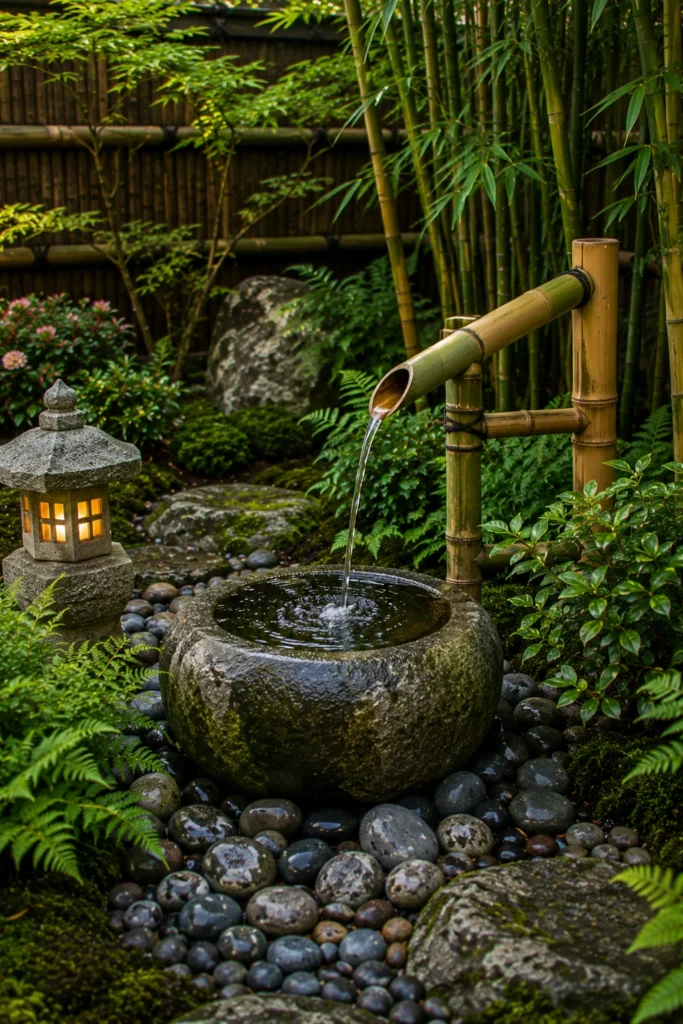
A bamboo water spout can bring a small movement of water to a quiet corner without taking up much space.
Place it beside a stone basin or shallow collection area. Surround the setup with pebbles and greenery so the bamboo does not look disconnected from the garden.
A few helpful options:
- Bamboo Water Spout: Use it to create a gentle stream of water into a stone basin.
- Stone Basin: Gives the water a natural place to collect and becomes part of the garden design.
- River Pebbles: Place them around the basin to hide plumbing or edges and give the feature a finished look.
21. Frame a Garden View
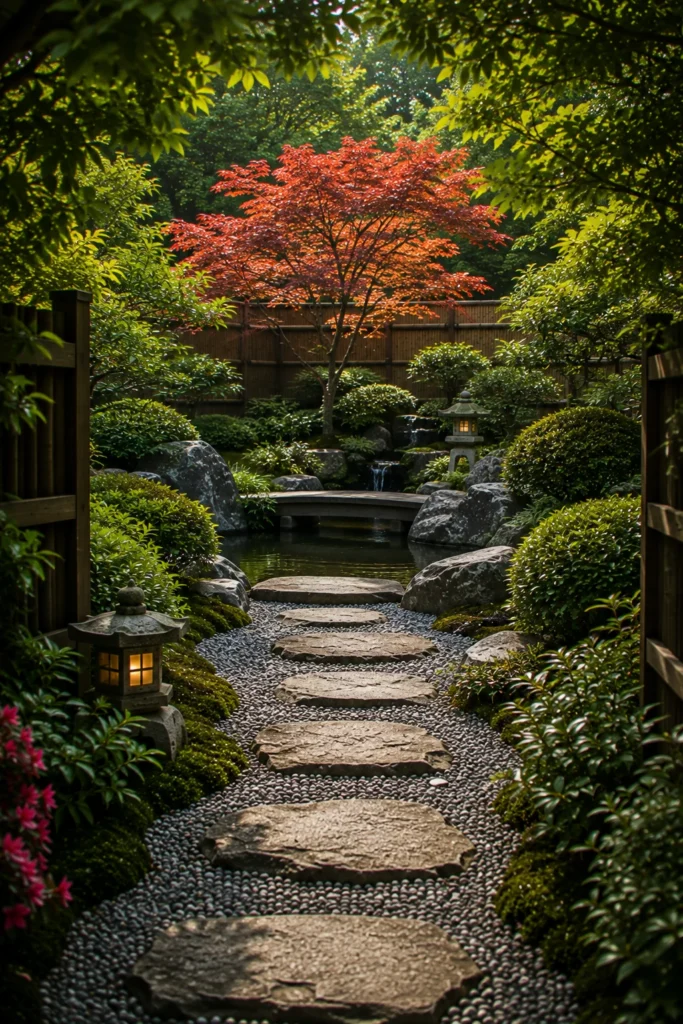
Instead of trying to fill every part of the garden, create one clear view that becomes the main focus.
You can frame a maple, stone arrangement, pond, or small bridge with shrubs and taller plants. Keep the area directly in front of the focal point relatively open so it remains easy to see.
A few helpful options:
- Japanese Maple or Feature Tree: Use one standout plant as the main point you want visitors to notice.
- Evergreen Shrubs: Place them to the sides to frame the view without covering the focal point.
- Stepping-Stone Path: Lead the eye toward the feature while also giving visitors a practical way to approach it.
Simple Tips for Creating a Japanese Garden
Start With Fewer Elements
One common mistake is trying to add every Japanese garden feature at once. I prefer starting with one main feature, such as a stone path, water element, or maple tree.
Once that part is established, add smaller details around it.
Keep the Planting Balanced
Japanese-style gardens usually look better when plants have room around them. Mix different heights and textures, but avoid filling every empty section with greenery.
Think about how the garden will look from the main viewing point before planting.
Use Natural Materials
Stone, wood, bamboo, gravel, and plants work well together because they have natural textures.
Try to repeat the same materials in different parts of the garden. For example, use the same type of stone around a path and water feature to make the whole space feel connected.
Leave Some Empty Space
Empty areas are useful in a Japanese-style garden. Gravel, moss, or an open section of ground can give the plants and stones more visual importance.
You do not need to decorate every corner to make the garden feel complete.
Final Thoughts
A Japanese garden is less about adding lots of decorations and more about choosing a few elements carefully. Start with the space you already have, work with its natural light and existing plants, and add features one at a time.
A simple stone path, a well-placed tree, some gravel, and a small water feature can completely change the feel of an ordinary backyard without making it complicated to maintain.