
A well planned front yard can make a home look much more welcoming without requiring a huge budget. You do not need to fill every corner with plants or expensive decorations. A few well chosen plants, a clean pathway and some simple landscaping can make a big difference.
If you are new to landscaping, start with the areas that people notice first, such as the walkway, entrance and space around the front door. Then add plants and decorative features around them.
Below, I’m sharing 18+ practical front yard landscaping ideas that I think can work well for small, medium and larger yards. I’ve also included simple steps for each idea so you can understand how to create a similar look in your own front yard.
Also Check: 25+ Tropical Garden Ideas for a Dreamy Backyard
1. Create a Welcoming Front Walkway
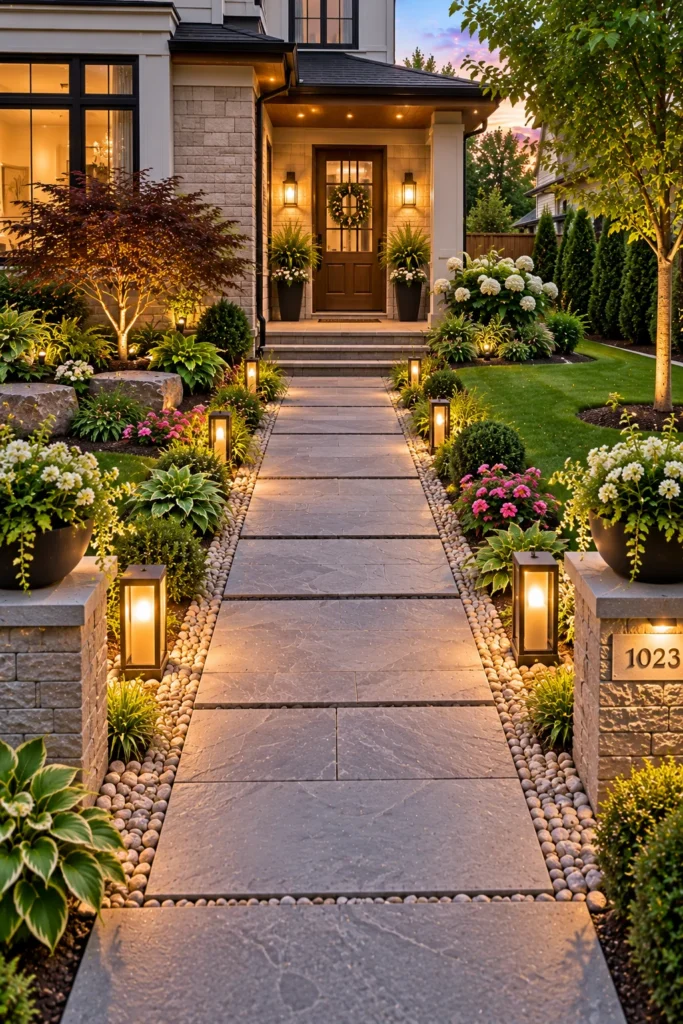
A clean walkway can make the entire front yard look more organized. It also gives visitors a clear route from the driveway or sidewalk to your front door.
Start by deciding where you want the walkway to begin and end. Mark both sides with a garden hose or string before doing any digging.
For the surface, you can use concrete pavers, natural stone, brick or outdoor tiles. Keep enough space between the edges for planting.
Add low-growing plants along both sides rather than using tall shrubs that block the path.
Practical tip: Keep the walkway wide enough for two people to walk comfortably side by side.
2. Add Flower Beds Around the Front Door
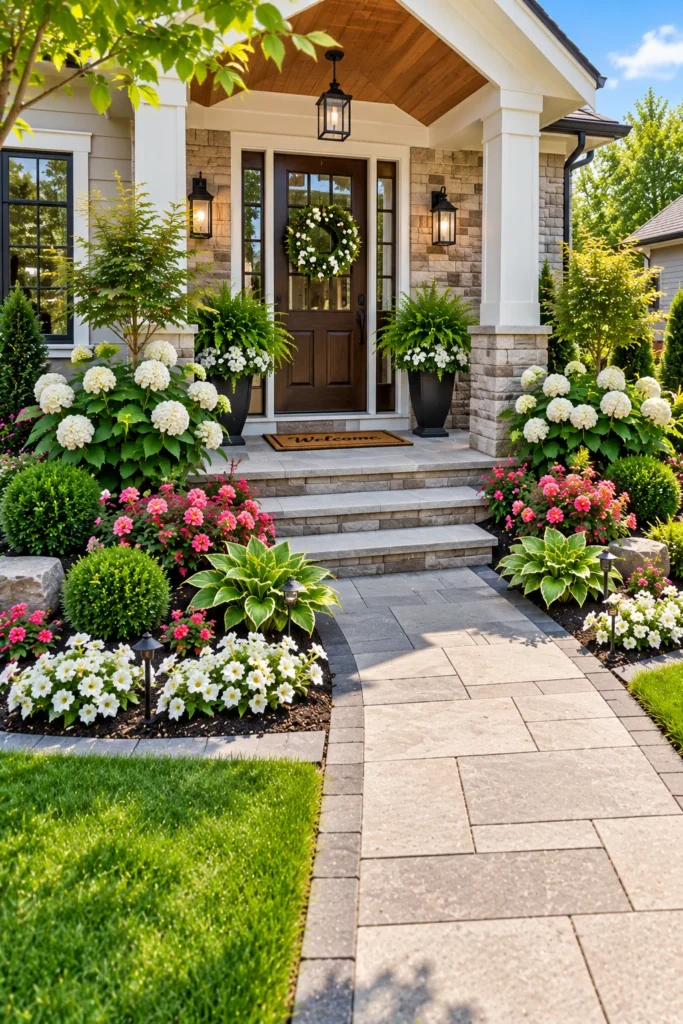
A small flower bed near the entrance can make a plain front yard much more colorful.
First, mark a simple curved or rectangular planting area around the entrance. Remove weeds and loosen the soil before planting.
Place taller plants toward the back and shorter flowers toward the front. This arrangement keeps the flowers visible from the street.
Choose flowers according to your local sunlight and climate conditions.
Easy approach: Use two or three flower colors instead of mixing too many varieties together.
Also Check: 25+ Best Koi Pond Ideas for a Beautiful Backyard
3. Use Small Trees as a Main Feature
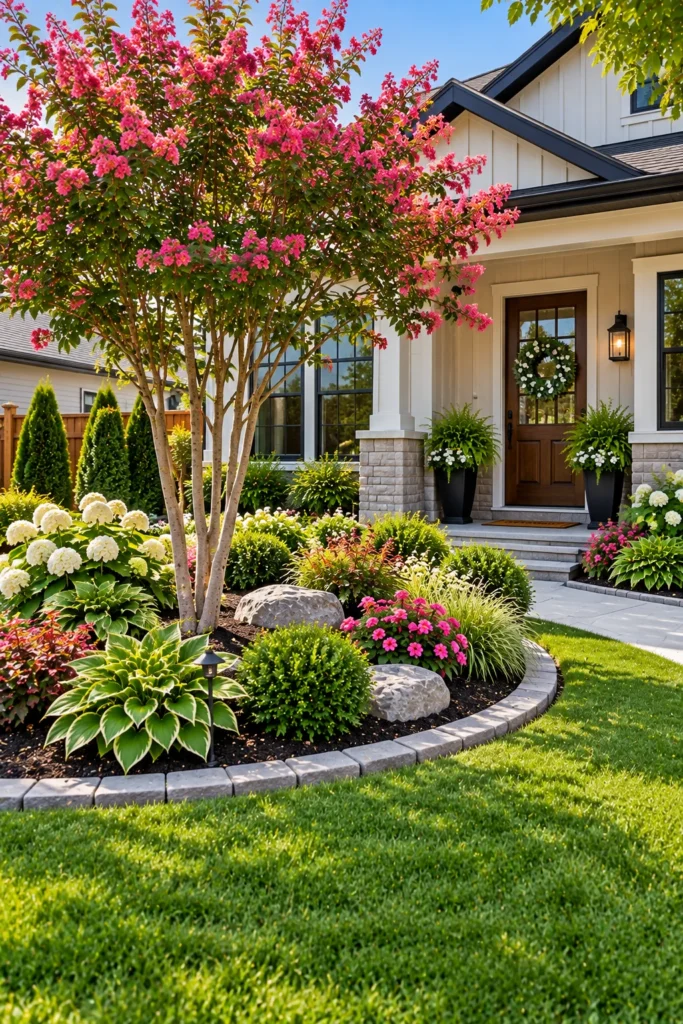
One well-positioned tree can give your front yard a finished appearance without taking up the entire space.
Choose a location where the tree will not block the front door, windows or driveway as it grows.
Dig a planting hole according to the tree’s root-ball size and improve the soil if needed. After planting, add a layer of mulch around the base while keeping mulch away from the trunk.
For a balanced appearance, you can place smaller shrubs around the tree.
Before planting: Check the tree’s mature height and spread so it does not become a problem near your house or utility lines.
4. Make a Simple Front Yard Lawn
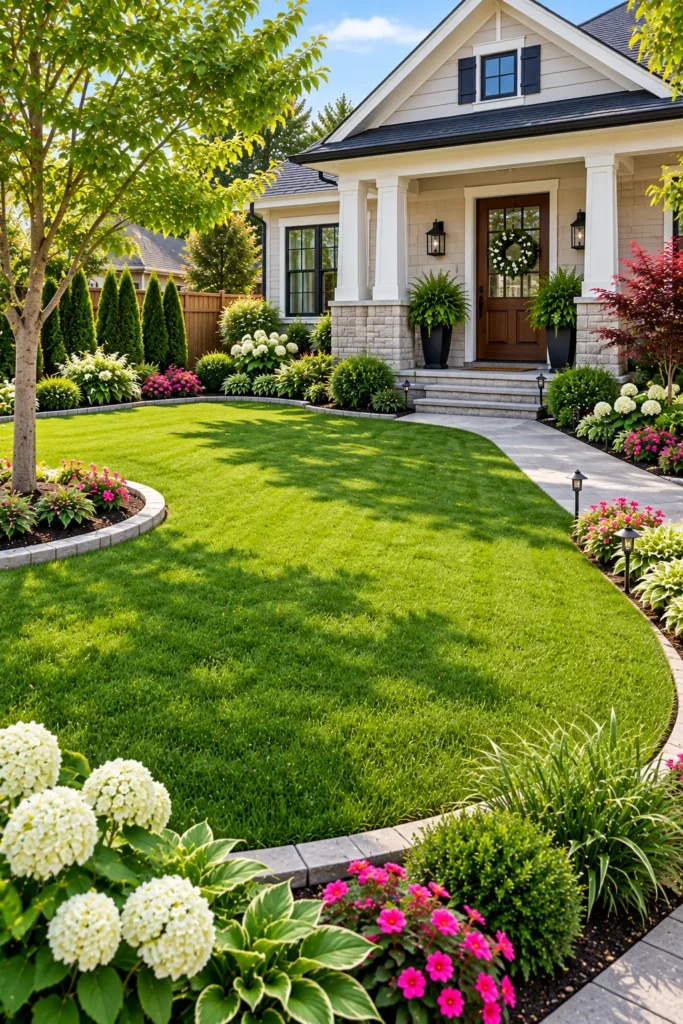
If you prefer a clean and open yard, keep the center area as lawn and place plants around the edges.
Start by clearing weeds and leveling uneven areas. Prepare the soil before installing grass seed or sod.
Create planting beds along the house, walkway or property boundary. This keeps the lawn open while still giving the yard plenty of greenery.
Keep the lawn edges neat with a simple border.
Beginner tip: A smaller, well-maintained lawn often looks better than a large lawn that is difficult to care for.
5. Add Large Planters Near the Entrance
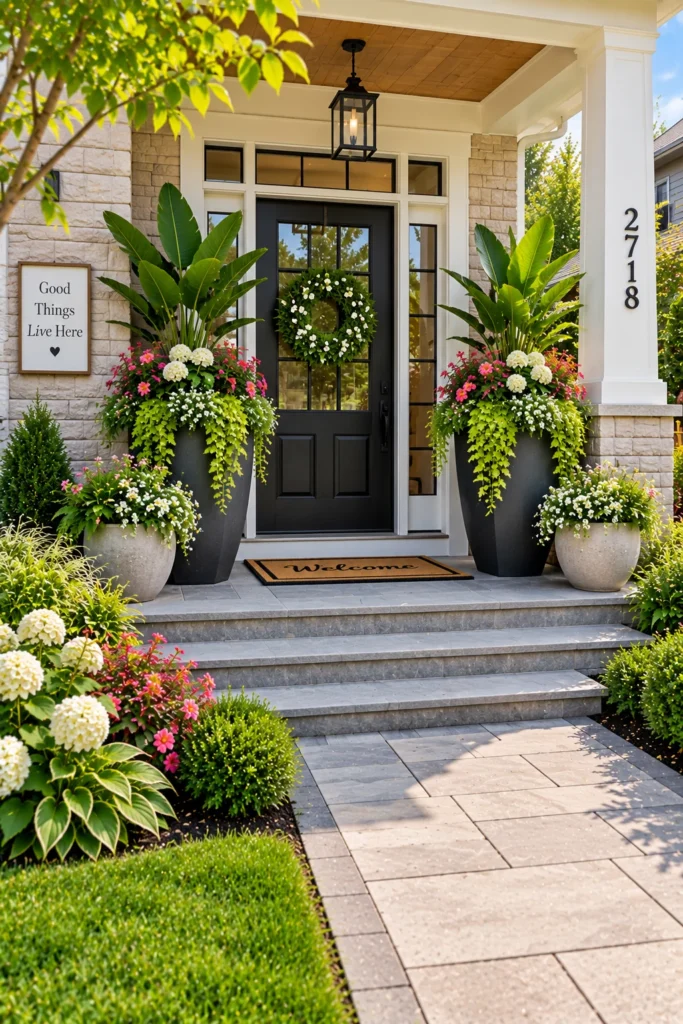
Large planters are useful when you want to improve the entrance without changing the entire landscape.
Place one large planter on each side of the front door, steps or porch.
Use plants with different heights. A taller leafy plant can go in the largest pot, while smaller flowers can be used in shorter containers.
Choose planters that match the color and style of your house.
Practical tip: Leave enough walking space around the pots so they do not make the entrance feel narrow.
6. Create a Curved Front Garden Bed
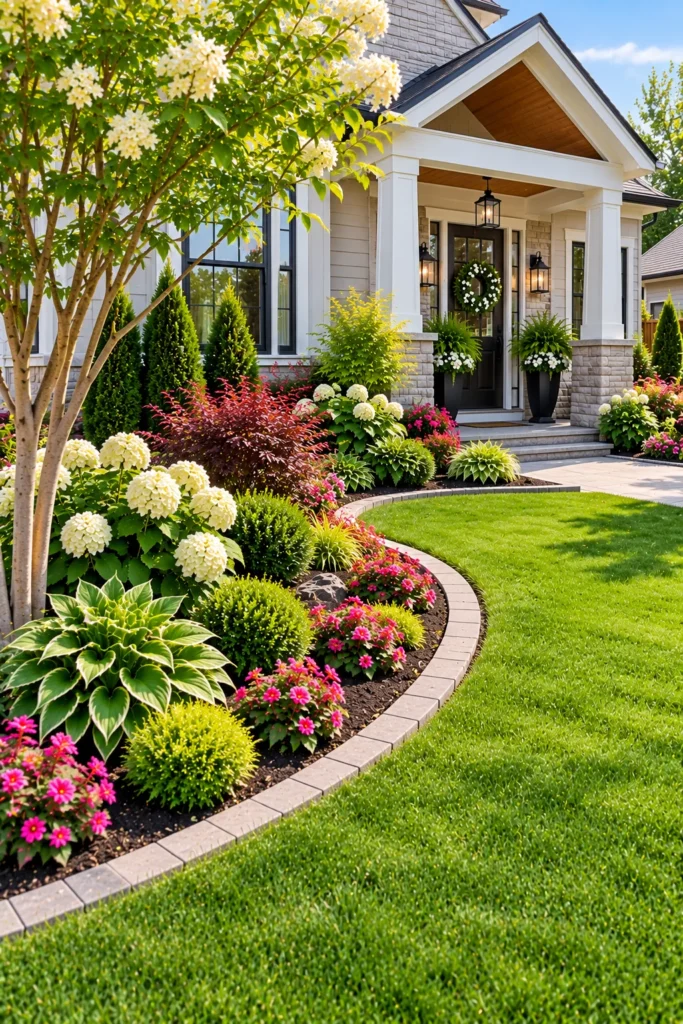
Straight planting beds can look very formal. A gentle curve can make a small front yard feel softer.
Use a garden hose to mark the curve before digging. Walk around the yard and check how it looks from the street and from your front door.
Once you are happy with the shape, remove the grass and prepare the soil.
Put taller shrubs toward the back and smaller plants near the front edge.
Simple trick: Repeat the same curve near another part of the yard if you want the landscaping to look connected.
7. Add Decorative Rocks Around Plants
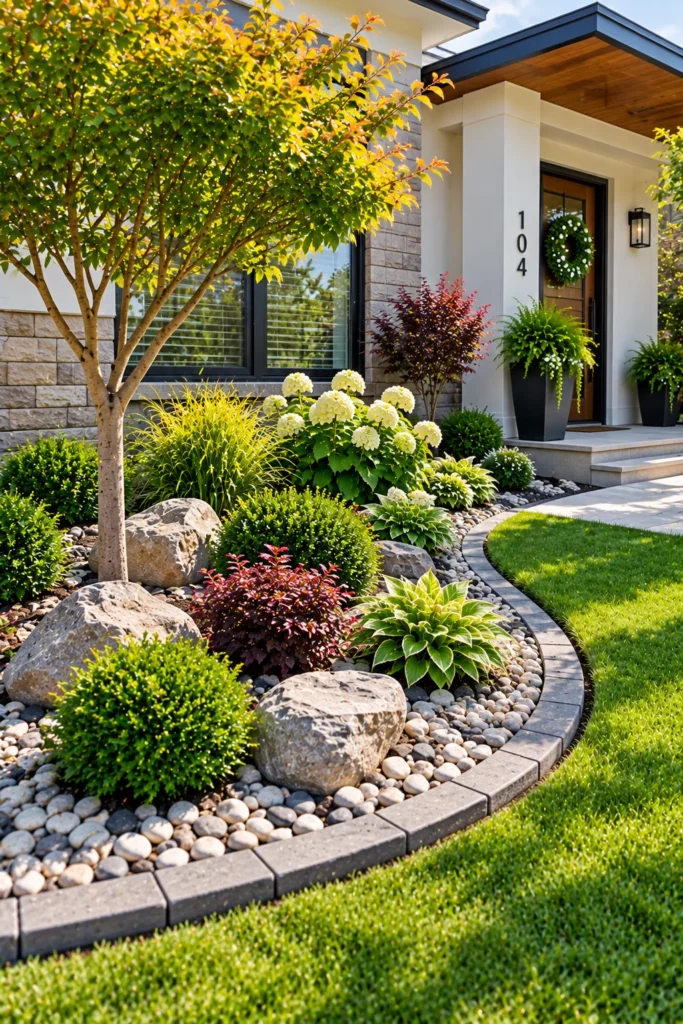
Decorative rocks are an easy way to cover exposed soil and give planting beds a cleaner appearance.
Choose one main rock color that works with your house and walkway.
Create a planting area first, then place your larger plants. Spread smaller decorative stones around the exposed soil.
Leave some space around plant stems so water can reach the soil properly.
Practical tip: Install a solid border around the rock bed to stop stones from spreading onto the lawn or walkway.
8. Create a Low-Maintenance Front Yard
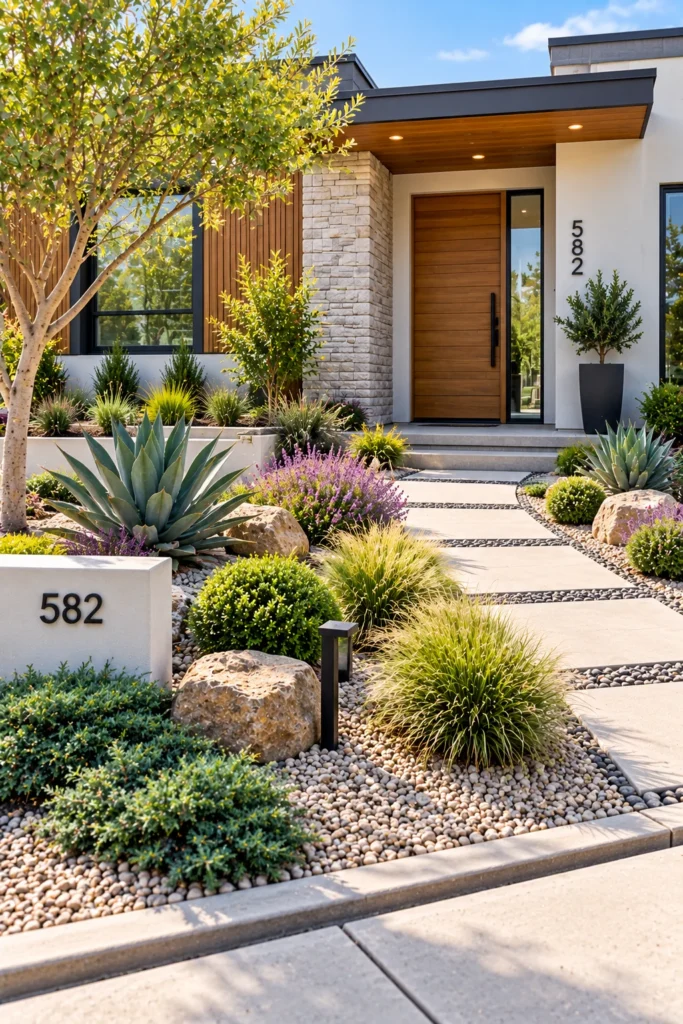
If you do not have much time for gardening, use fewer plants and choose varieties that suit your local conditions.
Start by reducing unnecessary lawn areas. Replace some of the space with decorative gravel, stone, mulch or suitable ground-cover plants.
Group plants according to their sunlight and watering requirements.
Keep enough open space around each plant so trimming and watering remain easy.
Good rule: Do not choose plants only because they look attractive at the garden center. Check their mature size and care requirements first.
9. Add Symmetrical Plants Around the Front Door
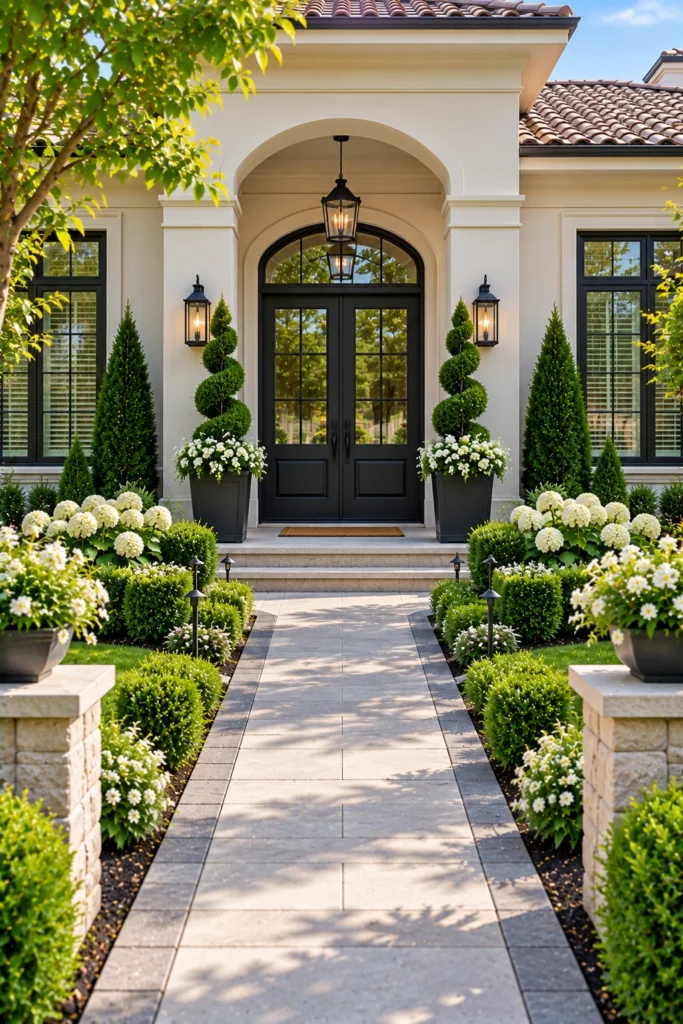
Symmetry works particularly well around a formal entrance.
Place matching planters, shrubs or small trees on both sides of the front door.
Measure the distance from the door before planting so both sides look balanced.
Keep the plants similar in height and shape.
This idea works especially well with a straight walkway leading directly toward the entrance.
Maintenance tip: Choose plants that can be trimmed easily if you want to maintain a neat shape.
10. Build a Front Yard Rock Garden
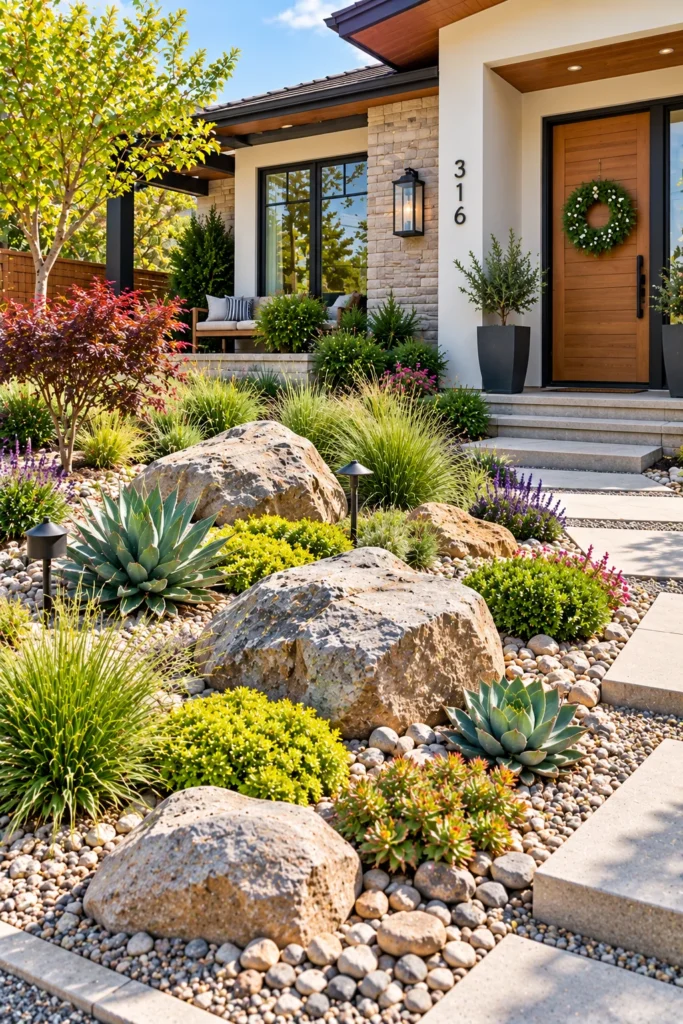
A rock garden can be a good choice for areas where maintaining a large lawn is difficult.
Choose a sunny section and remove weeds and unwanted grass. Shape the ground slightly so rainwater does not collect around the plants.
Place a few large rocks first. Then fill the gaps with smaller stones.
Add drought-tolerant or climate-appropriate plants between the rocks.
Practical tip: Avoid scattering rocks randomly. Grouping them in small clusters usually gives the planting area a more natural appearance.
11. Add Low Shrubs Along the House
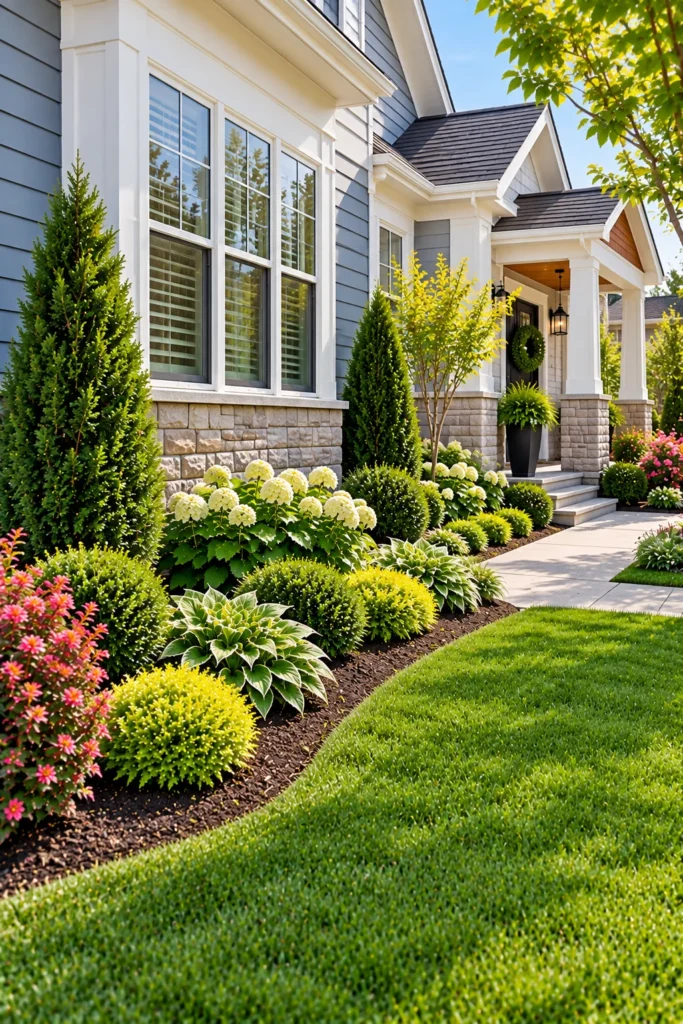
Shrubs can soften the hard lines of a house while keeping the front yard tidy.
Measure the planting area first and check how much space the shrubs will need when fully grown.
Place taller shrubs toward corners and shorter varieties closer to windows and pathways.
Leave enough space between plants for air movement and future growth.
Cover the soil with a suitable layer of mulch after planting.
Important: Keep plants away from vents, drainage areas and places where they could block windows or access points.
Also Check: 18+ Luxury Garden Ideas to Create a Beautiful Backyard
12. Create a Front Yard With Tropical Plants
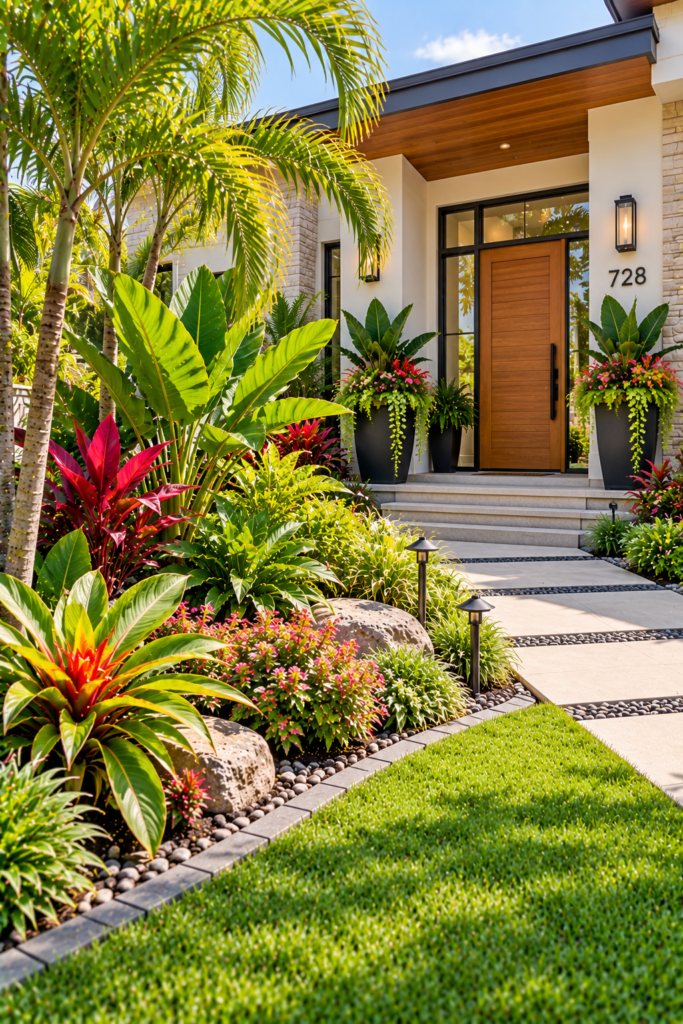
If your climate supports tropical plants, use large leaves and layered greenery to give the entrance a lush appearance.
Place taller palms or large-leaf plants toward the back of the planting bed. Add medium-sized foliage plants in the middle and smaller plants near the front.
Keep the walkway and entrance open.
Use plants with similar water and sunlight needs in the same area.
Beginner tip: Start with a few larger plants instead of buying many small plants. This makes it easier to understand how much space is actually available.
13. Add a Small Water Feature
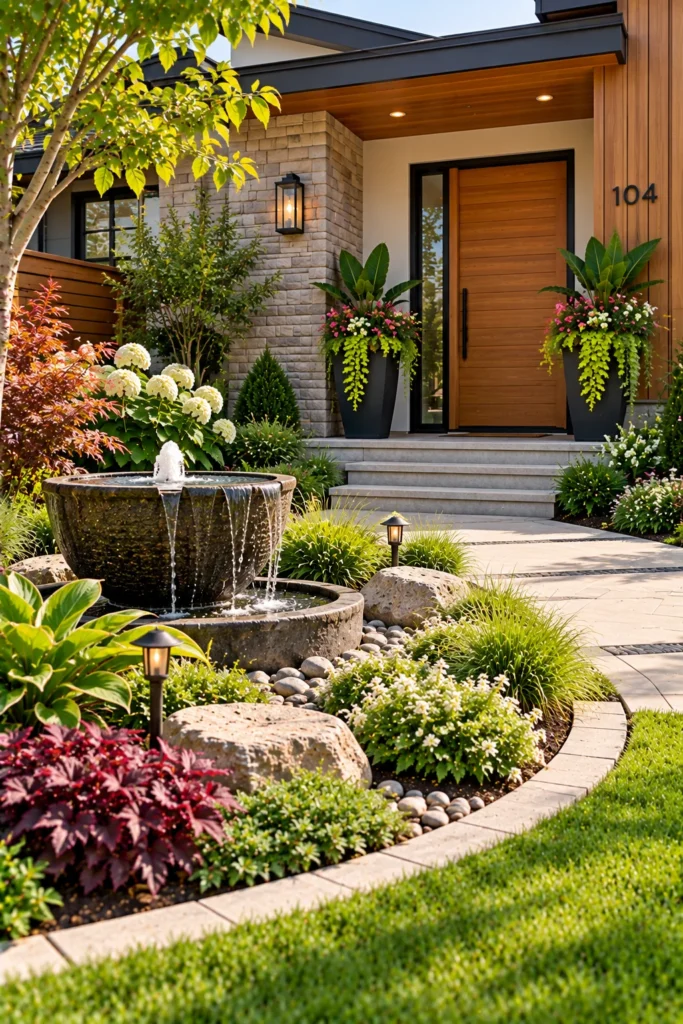
A compact fountain can become a focal point without requiring a large pond.
Choose a location near the entrance, walkway or seating area where the feature can be seen easily.
Install it on a stable, level surface and follow the manufacturer’s instructions for the pump and electrical connection.
Surround the fountain with a few low plants and decorative stones.
Practical tip: Keep plants slightly away from the water so leaves and soil do not constantly fall into the fountain.
14. Create a Front Yard Seating Corner
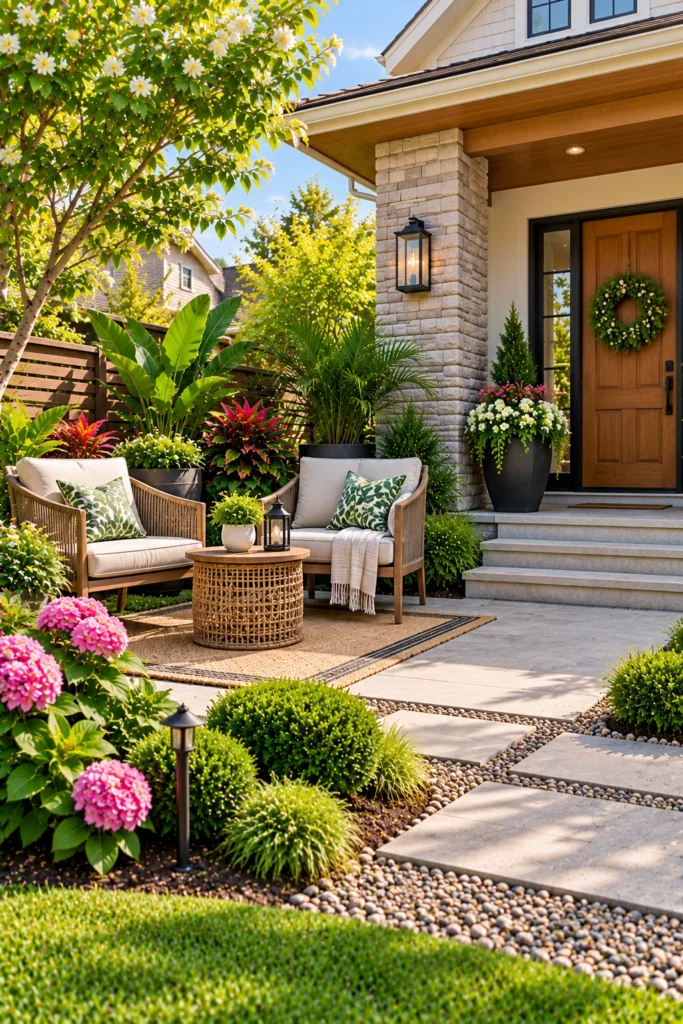
If your front yard has enough privacy, a small seating area can make the space more useful.
Choose a level section near the porch or garden bed. Place two weather-resistant chairs with a small table between them.
Add a few large planters behind the chairs for a green background.
Use a small outdoor rug if the surface and weather conditions allow it.
Keep it simple: Two comfortable chairs are often enough. You do not need to fill the entire yard with furniture.
15. Add Pathway Lighting
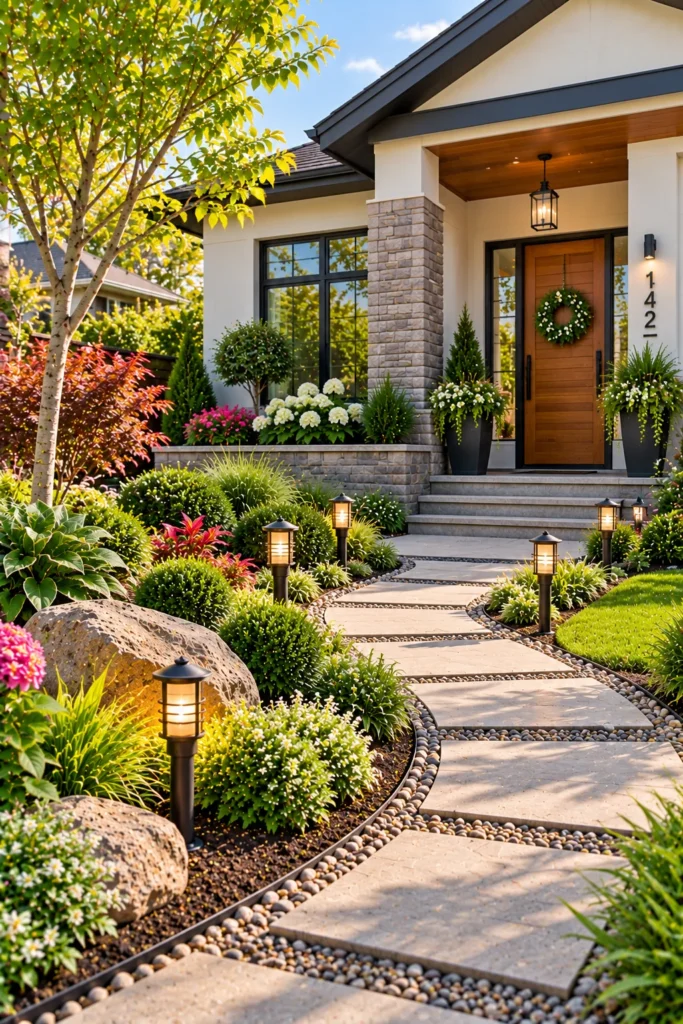
Small pathway lights can make the front yard easier to use after sunset while also highlighting the landscaping.
Place lights along the walkway rather than installing them at every few inches.
You can also add one or two low-intensity lights near larger trees or planting beds.
Keep electrical wiring properly protected and suitable for outdoor use.
Simple layout: Alternate the lights slightly from one side of the walkway to the other instead of creating a perfectly straight line.
16. Create a Layered Front Garden
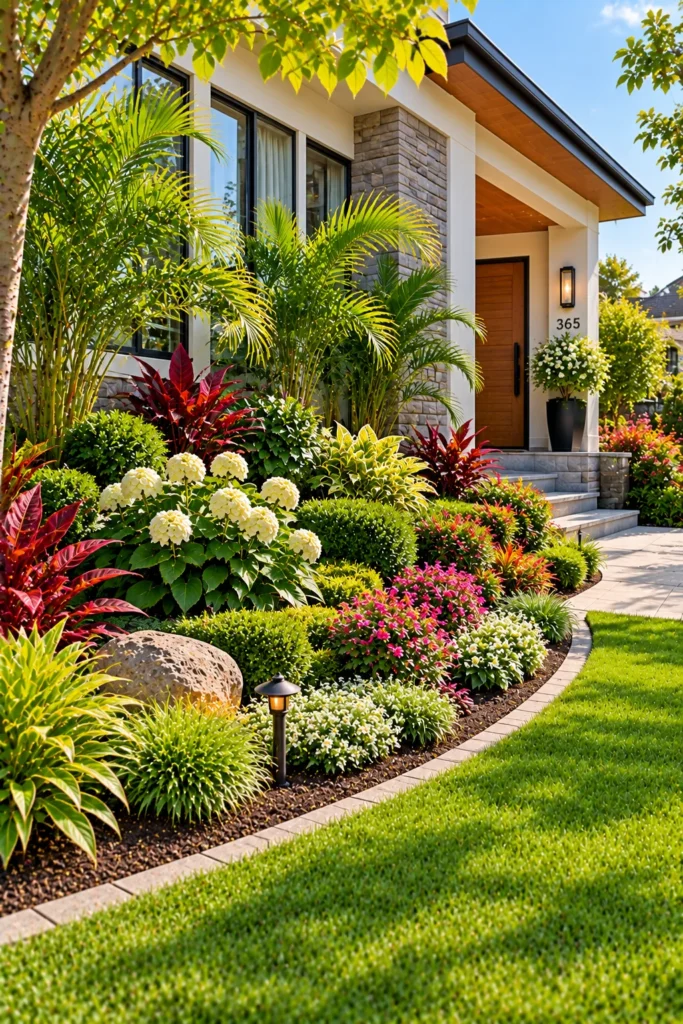
Using different plant heights is one of the easiest ways to make a planting bed look fuller.
Start with taller plants at the back near the house or boundary.
Place medium-sized shrubs in the middle and low flowers or ground-cover plants toward the front.
Leave enough space between each plant for mature growth.
This arrangement works well along walls, fences and wide front borders.
Practical tip: Take a photo of your empty planting bed and roughly mark the plant positions before buying anything.
17. Use a Gravel Border Around the Lawn
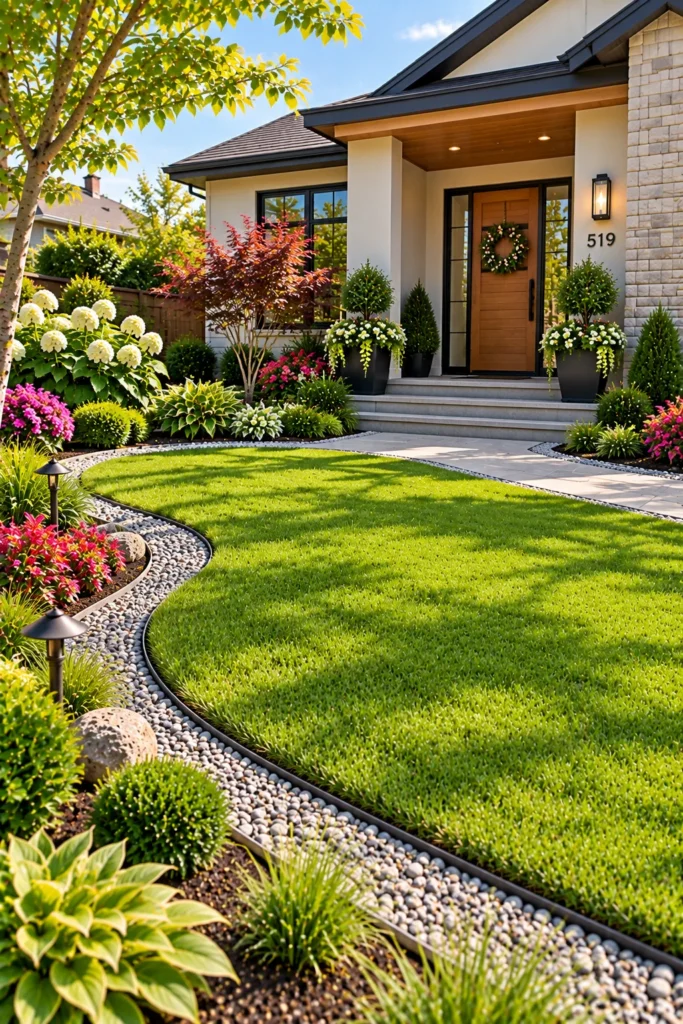
A narrow gravel strip can create a clean separation between your lawn and planting beds.
Mark the border and remove weeds and grass from the area.
Install a suitable landscape edging material along the lawn side.
Add a layer of landscape fabric if appropriate for your chosen setup, then spread the decorative gravel evenly.
Maintenance tip: Keep the gravel slightly below the lawn level so mowing and edging remain easier.
18. Make a Modern Front Yard With Clean Lines
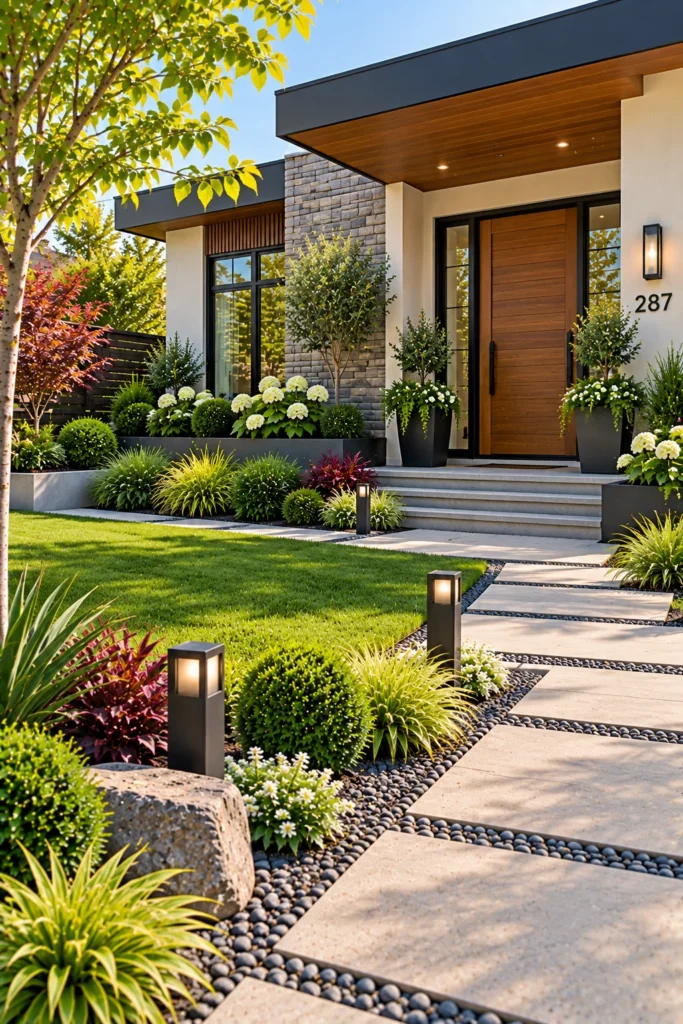
For a modern look, keep the landscaping simple and repeat the same materials throughout the yard.
Use rectangular pavers for the walkway and one main type of stone for planting beds.
Choose a limited plant palette with a few strong shapes. Ornamental grasses, clipped shrubs and architectural plants can work well when suitable for the climate.
Keep the center of the yard open instead of adding decorations everywhere.
Best approach: Use the same stone, planter finish or paving material in several areas to make the front yard feel connected.
19. Add a Beautiful Porch Garden
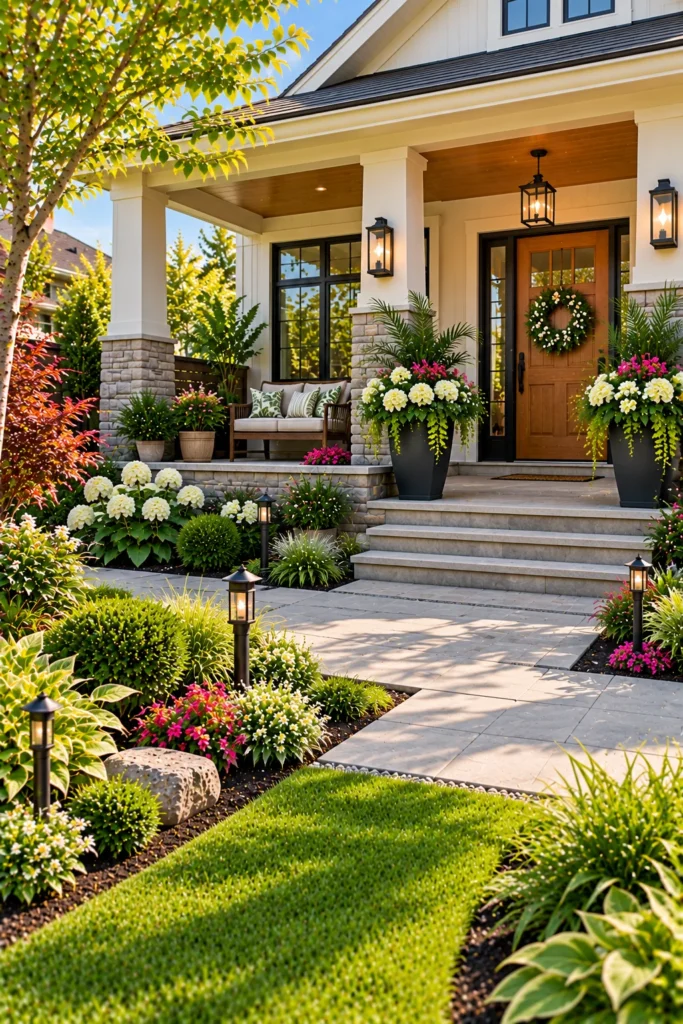
If your front porch is the main focus of the house, build the landscaping around it.
Start with two or three large planters near the porch steps. Add medium-sized plants along the sides and smaller flowers closer to the walkway.
Keep the front door visible from the street.
You can also place a small bench or two chairs on a larger porch, leaving a clear path to the entrance.
Practical tip: Keep decorative items close to the porch and leave the main walkway free from pots and furniture.
20. Combine Plants With a Stone Path
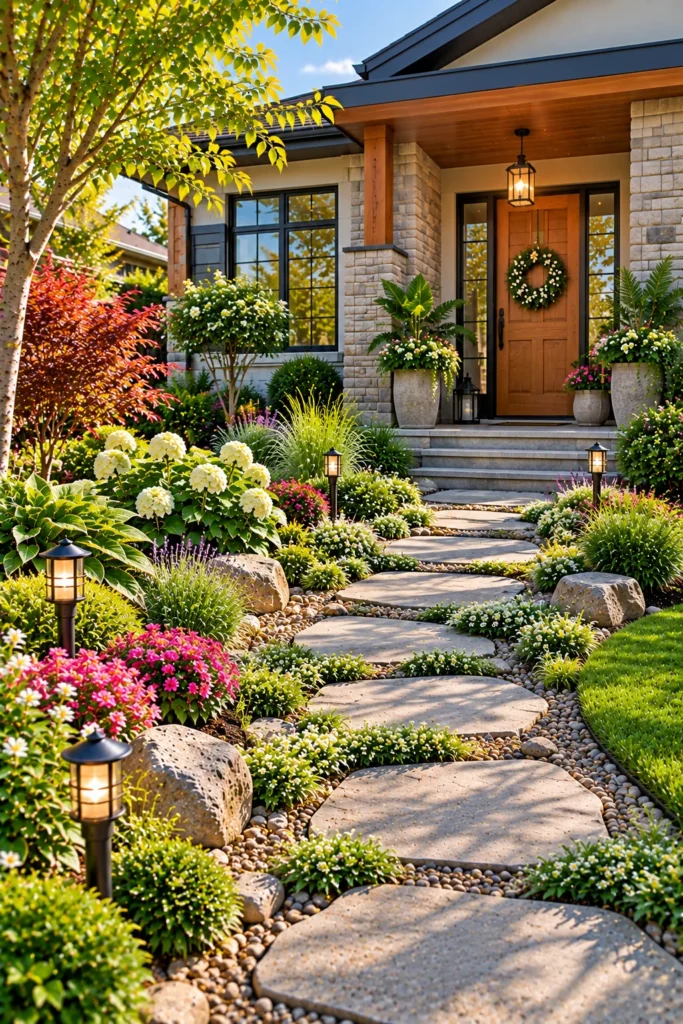
A stone path surrounded by greenery can give even a simple front yard a more finished look.
Choose large pavers or natural stones and place them from the sidewalk or driveway toward the entrance.
Before fixing them permanently, lay the stones on the ground and walk across them. Adjust the spacing until the steps feel comfortable.
Plant low-growing greenery along the edges without allowing it to spread onto the walking surface.
Simple trick: Use the same stone around nearby planting beds so the pathway does not look like a separate part of the yard.
How to Start Your Front Yard Landscaping
You do not have to complete everything at once. For a beginner, I would break the project into a few simple stages.
Step 1: Measure the Front Yard
Measure the available space before buying plants, pots or paving materials. Mark the driveway, walkway, windows and entrance so you know where planting can safely go.
Step 2: Decide What Should Stay Open
Keep enough room for walking, parking, opening gates and reaching the front door. This prevents the yard from becoming overcrowded later.
Step 3: Choose the Main Feature
Pick one main element such as a tree, flower bed, stone path, fountain or attractive entrance. Build the rest of the landscaping around it.
Step 4: Choose Plants Carefully
Check sunlight, mature size, watering needs and local growing conditions before planting. Plants that suit the location are usually much easier to maintain.
Step 5: Add Hardscaping First
Install paths, borders, stones or other permanent features before planting. It is much easier to work around an empty planting bed than to move plants later.
Step 6: Plant From Back to Front
Put tall plants at the back, medium plants in the middle and smaller plants near the front. This simple arrangement helps every plant remain visible.
Step 7: Finish With Small Details
Once the main work is complete, add planters, decorative stones, pathway lights or a small seating area. These details should support the main design rather than cover the whole yard.
Wrapping Up Your Front Yard Project
A beautiful front yard does not need to be complicated. Start with a clear walkway, choose plants that suit your space and keep the layout easy to maintain.
Even one new flower bed, a pair of large planters or a clean stone path can change the appearance of the entrance. Once those areas are working well, you can add more features gradually without having to redesign the whole yard.
Follow Us On: Pinterest